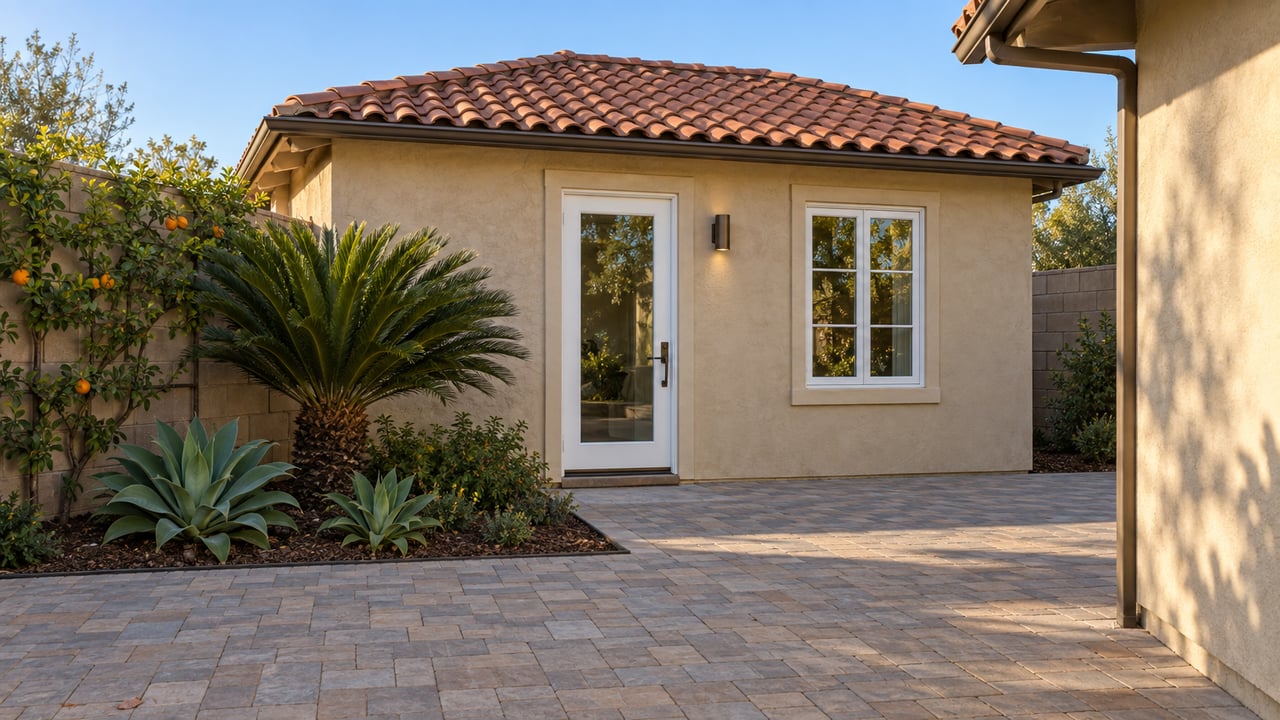
Two Yorba Linda homes went into escrow this year within a half mile of each other. Both sat on roughly two-thirds of an acre. Both had a barn, a covered arena footprint, and back-gate access to a public equestrian trail. One closed at $2.28M. The other lost the buyer at day 24 when the appraisal came in $340,000 under contract, the loan was denied, and the sellers relisted at a number that erased their remodel budget.
Neither outcome had much to do with how nice the barn was.
The mechanism nobody tells you about until it kills your deal
A residential appraiser working a Yorba Linda horse property is filling out Form 1004, the same form used for a tract home in Anaheim. Form 1004 has fields for bedrooms, bathrooms, and garage bays. It does not have fields for stall count, arena footing depth, tack room square footage, or manure setback compliance. What the appraiser cannot document, the appraiser cannot credit.
That mismatch is the whole story. A generalist appraiser assigned by a lender's national panel will pull the three closest sales, usually non-equestrian homes on smaller lots, adjust for square footage and lot size, and hand back a number. Your $180,000 MD Barnmaster with matted stalls, misters, and ceiling fans gets treated the way an appraiser treats a detached workshop, sometimes as a lump-sum "outbuilding" line credited at contributory value rather than replacement cost. In practice, a barn that cost $150,000 to build often lands somewhere between $40,000 and $70,000 on the appraisal report, and that gap is the appraisal risk you are exposing yourself to the moment you accept a financed offer.
Yorba Linda equestrian properties on lots of roughly 0.4 to 1+ acre have been trading in the $1.9M to $2.4M band across 2024 through 2026, while the broader citywide single-family market sits in the low-to-mid $1M range. That spread is real, but it is buyer-pool spread, not appraiser-panel spread. Your buyer sees the barn as an asset. The appraiser has to defend the same barn as a residential improvement to an underwriter in another state.
What the appraiser is willing to credit vs. what you actually built
The gap plays out line by line. On a Yorba Linda horse property, here is where sellers most commonly lose value on paper:
- Barn: Sellers see replacement cost, often $150K to $240K for a well-built six-stall structure. Appraisers assign contributory value, usually a fraction of replacement, adjusted down further if comps do not contain similar structures.
- Arena: The 100x200 sand-footing arena that the buyer paid a premium for shows up as "improved outdoor area" with a modest credit.
- Covered grooming stalls, tack sheds, feed storage: Frequently rolled into a single outbuilding line.
- Turnout runs and paddocks: No dedicated line at all.
- Trail access: Not appraised. Not on the form.
- Usable flat acreage: This one actually helps you, because lot size is on the form, and Yorba Linda's larger equestrian parcels are the strongest defensible input the appraiser has.
The seller who prices as if all seven line items count is pricing against a form that only counts two of them.
The buyer pool math your listing price has to survive
Yorba Linda's equestrian buyer pool is small, motivated, and geographically anchored. The Yorba Linda Country Riders, the city's only equestrian club, celebrated their 55th year in 2025 with a ribbon cutting at the Phillip S. Paxton Equestrian Center on Buena Vista Avenue. That club membership, plus the boarders and lesson students cycling through Paxton, plus the riders who trailer to the Casino Ridge, Quarter Horse, and Gun Club Road Linear Park staging areas, is effectively your active local buyer list. It is not thousands of people. It is dozens.
Those buyers pay a premium because the property does something they cannot replicate by renting board. The general-market buyer looking at the same listing does the opposite math. They price the barn as a demolition cost and the arena as a lawn they will have to install. If a general-market buyer is the one who wins the bid, you often close at the low end of the band and the appraisal still comes in short because the appraiser is pulling comps from that same general-market pool.
Pricing strategy on these properties is therefore not "market value plus improvements." It is: what price will an equestrian buyer defend to a residential appraiser with an equestrian-competent comp packet in the appraiser's hands on inspection day. If you cannot supply that packet, you have priced the property for the wrong buyer.
The 2025 fire overlay changed the disclosure math
In 2025, Yorba Linda adopted the updated CalFIRE Local Responsibility Area Fire Hazard Severity Zone maps. The city reports more than 6,500 acres now sit in Moderate, High, or Very High designations, with over 4,700 acres in Very High. Because the properties large enough to keep horses tend to sit in the foothill and semi-rural pockets of the city, a disproportionate share of Yorba Linda's equestrian inventory is now in a High or Very High zone.
That triggers seller disclosure obligations under California Civil Code and the defensible-space rules under Public Resources Code section 4291, which you can read directly on the California Legislature site. For a horse property, defensible space is not a checkbox. It is barn setbacks, hay storage location, brush clearance around paddocks, and access-road width for fire apparatus. Buyers in a High or Very High zone are increasingly asking for compliance documentation up front, and insurance carriers are pricing coverage off the same designation. A seller who cannot produce that documentation is negotiating in the dark against a buyer who has already priced the missing paper into their offer.
The CAL FIRE FHSZ viewer will tell you which zone the parcel sits in. Pull it before you list.
Yorba Linda's per-square-foot horse allowance is the other document the buyer will ask for
The city's animal regulations tie horse count directly to lot size. The allowances that matter most on small equestrian parcels:
- 10,000 to 15,000 sq ft: 1 equine
- 15,001 to 17,000 sq ft: 2 equines
- Larger lots scale up from there under Article 7 of the zoning code
Horses are permitted in the R-A, RLD, and R-E zones by right, and in some R-S and R-U parcels by permit. Barns and stables must sit at least 50 feet from any dwelling, and no equines are allowed in required front, side, or street-side yards. A buyer whose plan requires three horses on a parcel zoned for two will either walk or negotiate you down for the friction. A zoning verification letter from the City Planning Department, obtained before you list, closes that argument before it starts. Start at the city's zoning code page and confirm the parcel's designation on Map Yorba Linda.
If the property sits inside an HOA, the CC&Rs can be stricter than city code. Some Yorba Linda planned communities allow horses on paper but restrict arena hours, trailer parking, or manure storage in ways that reduce a serious buyer's willingness to pay. Pull the CC&Rs from your title company before you accept an offer, not after.
The pre-listing sequence that keeps the number
The Two Week Selling System™ works on horse properties, but only if the file is loaded before day one. In order:
- Pull a zoning verification letter from Yorba Linda Planning that states the parcel's zone, permitted horse count, and setback compliance.
- Pull CC&Rs and any HOA rulebook covering livestock, arena use, and trailer parking. Confirm delivery timelines for the resale package.
- Pull the FHSZ designation and, if the parcel is in a High or Very High zone, document defensible-space compliance including PRC 4291 clearance and any home-hardening upgrades.
- Build the equestrian comp packet. Recent Yorba Linda equestrian sales, plus adjustments for barn quality, arena footprint, and lot usability. This is the document your listing agent hands the appraiser at the door.
- Request an appraiser with equestrian and geographic competency. Under USPAP, an appraiser is required to have geographic and property-type competency for the assignment. If the lender assigns a suburban tract appraiser to a semi-rural horse property, that assignment can be challenged before the appraisal happens.
- Obtain an insurance quote for the buyer's file. Carriers pricing off the 2025 FHSZ map are the ones killing deals in underwriting. A quote in hand, offered to the buyer, moves the friction off your close date.
- Photograph and video the barn, arena, tack room, trail access, and any staging or trailer parking as separate marketing assets. The buyer pool that pays the premium is looking specifically at these images, not the kitchen.
Miss any of steps 1 through 5 and the friction lands in escrow. Escrow friction on a horse property is not a repair credit. It is a canceled deal, a stale listing, and a repositioned price.
FAQ
Can I sell a Yorba Linda horse property all-cash to skip the appraisal problem? Yes, and a portion of the equestrian buyer pool does close all-cash, particularly on the upper end of the $1.9M to $2.4M band. All-cash removes the appraisal contingency but not the disclosure obligations, the CC&R conflicts, or the FHSZ documentation the buyer's insurance carrier will still request.
Do the covered arena, barn misters, and tractor add value on the appraisal or only on the listing price? On the listing price, yes, if you market to the equestrian buyer. On the appraisal, usually as a partial contributory credit rolled into an outbuilding line. The gap between those two numbers is exactly what the pre-listing comp packet is designed to close.
How does trail access get valued? It does not get valued on the appraisal form. It gets paid for by the equestrian buyer. Properties with back-gate access to the El Cajon Trail or a short hack to Paxton, Casino Ridge, or Gun Club Road Linear Park command a premium from the buyer, not the appraiser. Your marketing carries this value, not your comps.
What if my parcel is in a High Fire Hazard zone and I have not done any defensible-space work? Start the work before you list. Buyers and their insurance carriers are pricing the missing compliance into the offer, and you are giving up more at the negotiating table by disclosing an uncured condition than by fixing it up front.
Ready to price a horse property against the file, not the form
Selling a Yorba Linda equestrian property is a specialized transaction with a specialized buyer pool and a general-market appraisal problem sitting between them. The team that closes these deals at the top of the band is the team that loads the file before day one and marketing runs on both channels at once. If you own one of the roughly 0.4 to 1+ acre horse-zoned parcels in Yorba Linda and you are thinking about the next 12 months, The Bald Brothers Team will build the pre-listing packet, the appraiser strategy, and the two-channel marketing plan around your specific parcel.
Start the Two Week Selling System™ — Get your free plan.