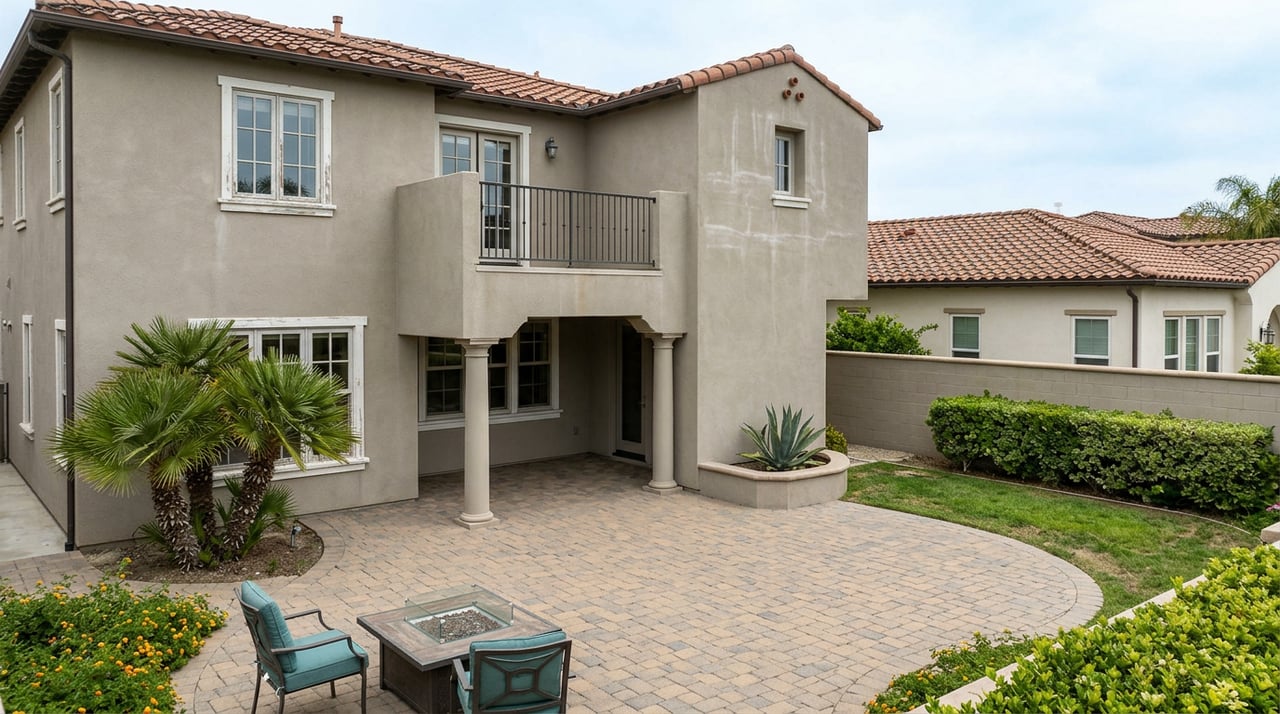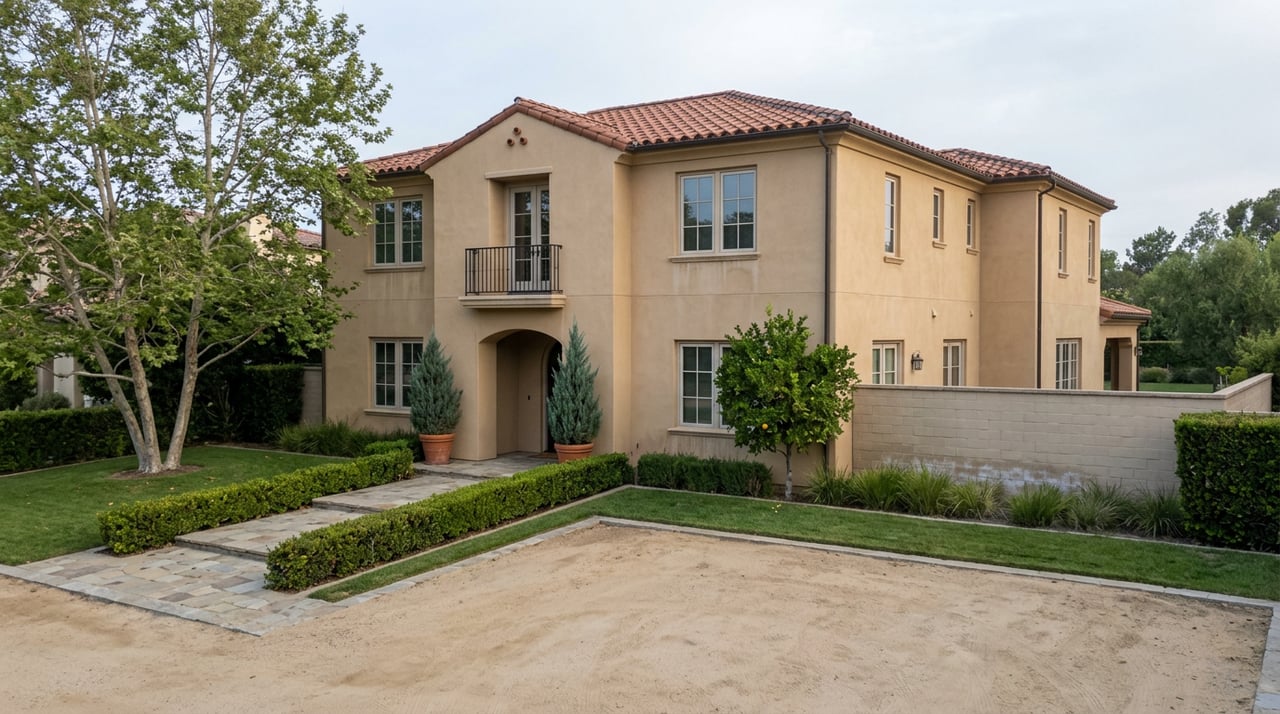
Two homes list at $1.4 million in Yorba Linda this month. Same square footage, same school boundary, same three-car garage. One buyer's true annual housing cost is $9,000 higher than the other's, and nothing on either listing sheet says why.
The difference is a Community Facilities District tax that only shows up once someone pulls the actual property tax bill. It doesn't move the list price. It doesn't show up in a Zestimate. It shows up in escrow, or in a lender's affordability math, or in a buyer's mailbox the following December, and by then the offer is already written.
The City Yorba Linda Isn't
Ask around Orange County and people assume Mello-Roos is a tax on new construction, full stop. In places like Rancho Mission Viejo or parts of Irvine's Great Park, that assumption holds. In Yorba Linda, it mostly doesn't. Much of the city predates the 1982 Mello-Roos Community Facilities Act, or was built through the 1980s in tracts that never required a Community Facilities District to fund roads, sewers, or schools. A meaningful share of Yorba Linda's housing stock, according to the city's own Housing Element, was built before 1989, with a large portion going back before 1979. Builders marketing newer Yorba Linda product have at times leaned into "No Mello-Roos" as a selling point specifically because it's the exception here, not the rule.
That's the trap. Buyers who've shopped Irvine or Rancho Mission Viejo arrive in Yorba Linda expecting a CFD line item on every home and stop checking for it. Buyers who've only shopped older Yorba Linda tracts assume the whole city is CFD-free and stop checking too. Both habits fail in the same handful of neighborhoods.
Where It Actually Lives
The special tax is concentrated in specific newer communities, not spread evenly across the city. Kerrigan Ranch and Vista del Verde, both hillside developments on the eastern side of Yorba Linda, carry Mello-Roos assessments that can add $5,000 to $15,000 a year on top of the base property tax bill. A separate Community Facilities District tied to a Pulte-built development funds school facility costs for the Placentia-Yorba Linda Unified School District, a tax that exists specifically because that development added students to a district budget that didn't plan for them. Older luxury pockets like Bryant Ranch, by contrast, typically carry none of it.
| Yorba Linda area | Mello-Roos / CFD status | Reported annual range |
|---|---|---|
| Kerrigan Ranch | Present on many parcels | $5,000–$15,000 |
| Vista del Verde | Present on many parcels | $5,000–$15,000 |
| Pulte-built CFD tract | Present, funds PYLUSD school facilities | Varies by parcel |
| Bryant Ranch | Generally absent | $0 |
| Older tracts citywide (pre-1989) | Generally absent | $0 |
Even within the higher range, the number isn't fixed statewide. One statewide lending source puts typical Mello-Roos bills anywhere from a few hundred dollars a year in smaller districts to more than $10,000 in larger, newer developments, with most buyers in active CFD communities landing between $1,200 and $6,000 annually. The spread exists because every district sets its own formula when the bonds are issued. There is no citywide number to memorize. There's only the parcel in front of you.
Why the List Price Never Shows It
Regular property tax scales with your purchase price. Mello-Roos doesn't. It's a fixed dollar amount attached to the parcel when the district was formed, and it doesn't reset, increase, or disappear just because the home sold for more or less than the last owner paid. The charge is secured by a continuing lien recorded against the property, which is why it surfaces on a preliminary title report even when nobody mentions it out loud. Most CFDs run 20 to 40 years from the date the bonds were issued, and that clock started when the district was created, not when you bought the house. A buyer moving in during year eight of a 30-year bond term is picking up the remaining 22 years, no more and no less.
That mechanic is exactly why the tax is invisible on a listing sheet. A $1.4 million home with a $9,000 annual CFD charge and a $1.4 million home without one look identical in every marketing photo and every price-per-square-foot comparison. The only place the difference lives is the tax bill itself, under a line labeled CFD, Community Facilities District, or the specific district's name.
The Disclosure Law Everyone Assumes Someone Else Is Handling
California doesn't leave this to chance, at least on paper. Under state law, a seller in an active Community Facilities District has to make a good faith effort to obtain a Notice of Special Tax from the agency that levies it and hand that notice to the buyer before the sale closes. The notice is supposed to spell out the current year's maximum charge, how fast it's allowed to escalate, and the date the special tax stops being collected.
The obligation to disclose survives an as-is sale. Selling a Yorba Linda home as-is waives repairs and credits, not the legal duty to disclose a known special tax lien.
That matters directly for anyone considering a fast, as-is disposition in a CFD tract. Skipping repairs is one thing. Skipping the Notice of Special Tax is a different problem, one that can follow a seller after closing if a buyer later discovers the charge and argues they weren't told.
There's a second disclosure that trips up buyers for an unrelated reason. When ownership changes, the county assessor typically issues a supplemental tax bill to reflect the new purchase price, and that bill goes straight to the new owner, not through the mortgage lender's impound account. It's not Mello-Roos. It's a different one-time surprise that lands in the same mailbox around the same time, which is part of why the first year of ownership in a newer Yorba Linda tract can feel more expensive than the numbers on closing day suggested.
Before You List or Write an Offer
For a property that might sit in a CFD, the sequence that avoids a late surprise looks like this.
- Pull the current secured property tax bill using the parcel's Assessor's Parcel Number and look for any line item labeled CFD, Community Facilities District, or Special Tax.
- If a charge appears, request the Notice of Special Tax directly from the agency named on the bill. Sellers are required to make this request; buyers can make it too.
- Cross-check the preliminary title report for a recorded special tax lien, since the CFD will show up there even if the tax bill line item is easy to miss.
- Have a lender run the annual CFD charge through the actual mortgage qualification math, not just the sale price, since the charge counts toward monthly housing costs the same way property tax does.
- If listing a home in one of the affected tracts, request the Notice of Special Tax before the home goes live, so the disclosure is ready the moment an offer comes in rather than something discovered mid-escrow.
None of this changes what a Kerrigan Ranch or Vista del Verde home is worth. It changes whether the true cost of owning it gets discovered in week one of a search or week three of escrow.
What This Means Either Way
For a seller in an affected tract, the math changes the net conversation, not the strategy. Two buyers comparing your home to a Mello-Roos-free listing across town aren't just comparing price, they're comparing total monthly cost, and getting ahead of that comparison with a ready disclosure keeps a buyer's confidence intact instead of triggering a renegotiation late in the process. For a buyer, the lesson is blunter: a home that looks $50,000 cheaper than a comparable listing might just be carrying a bond payment the other one already paid off.
FAQ
Does Mello-Roos ever go away? Yes. Most districts are structured to retire in 20 to 40 years from the date the bonds were issued. The end date is fixed to the district, not to any individual owner's purchase date.
Does Mello-Roos affect how much I can borrow? Yes. Lenders generally include the annual CFD charge in the housing expense used to calculate qualifying ratios, the same way they treat base property tax. A high Mello-Roos bill can lower the loan amount a buyer qualifies for on paper, even if the sale price stays the same.
If I sell my Yorba Linda home as-is, do I still have to disclose Mello-Roos? Yes. An as-is sale addresses repairs and credits. It does not remove the legal requirement to provide a Notice of Special Tax when the property sits inside an active district.
If you're weighing a sale in Kerrigan Ranch, Vista del Verde, or any Yorba Linda tract where a special tax might already be attached to the parcel, The Bald Brothers Team can pull the disclosure early, price the home with the real carrying cost in view, and keep that conversation from becoming a late-escrow surprise. Start the Two Week Selling System™ and get your free plan.