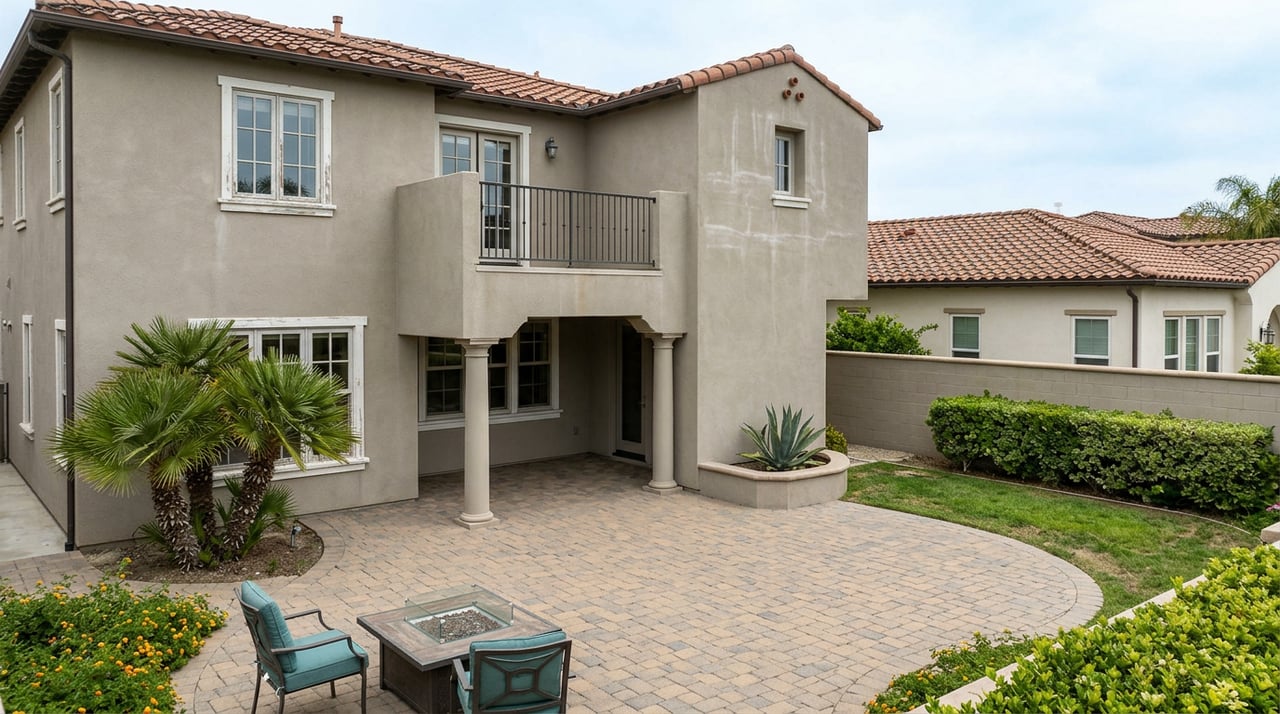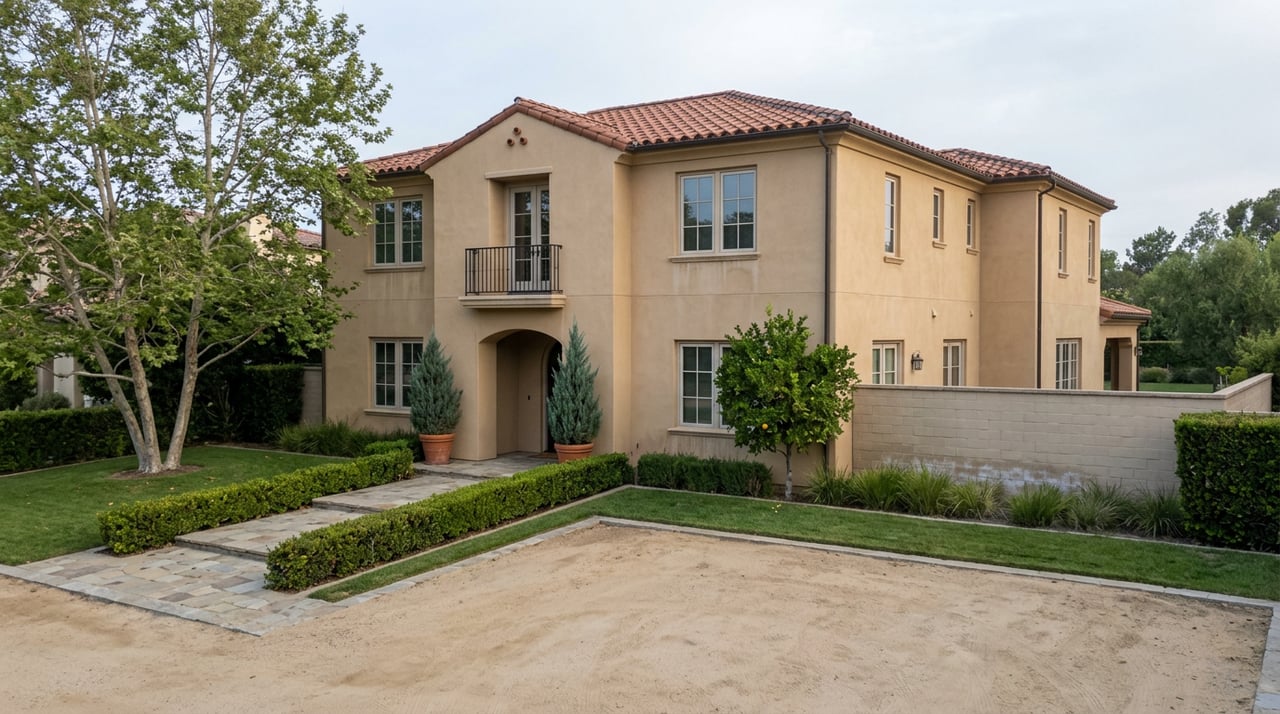
A seller in the San Antonio neighborhood lists her half-acre lot as an equestrian property. The zoning is right. The lot size clears the threshold. The listing photos show a paddock and a tack shed that took years to build out. Three weeks into escrow, the buyer's title search turns up a set of CC&Rs that never mention horses at all, because the private street association that governs the parcel was written for a subdivision, not a ranch. The zoning code says yes. The recorded document that actually controls the property never asked the question.
That gap is the thing most sellers of Yorba Linda horse property don't find until it's already a problem in escrow. The city's zoning code and a neighborhood's private governing documents are two separate systems, written by two separate authorities, and nothing forces them to agree. Selling a horse property here means selling two documents at once, and only one of them is public record.
What the Zoning Code Actually Allows
Yorba Linda's horse-friendly reputation is built into three residential zones, and each one treats the equestrian use differently on paper even when the outcome looks the same on the ground.
| Zone | What the code calls it | Minimum lot size for the zone | Horses allowed by right |
|---|---|---|---|
| R-A | Residential Agricultural | 1 acre | Yes, and the code lists equine-keeping as a primary permitted use, not just an accessory one |
| RLD | Residential Low Density | 39,000 sq ft | Yes, the code describes large estate and equestrian-oriented lots as characteristic of the zone |
| R-E | Residential Estate | 15,000 sq ft | Yes, at the zone's lot-size floor |
Across all three zones, and even in some R-S or R-U parcels, the city's own guidance sets the practical threshold at 15,000 square feet. At or above that size, horses are permitted outright. Between 10,000 and 15,000 square feet, a conditional use permit is required before you can keep one. Below 10,000 square feet, it isn't an option at all. That threshold is spelled out directly in the city's zoning FAQ, and it's the first thing a listing agent should confirm against the parcel, not against the neighborhood's reputation.
The code goes further than lot size. Barns and stables have to sit at least 50 feet from any dwelling. Arenas can sit closer, but if one lands within 50 feet of a neighboring house, the code adds use-time and dust-control restrictions. None of that shows up in a listing photo, and none of it shows up on a preliminary title report either. It lives in Article 7 of the zoning code, and it's worth pulling before a listing goes live rather than after an inspector flags a stable that's four feet too close to the property line.
Where the Private Paperwork Overrides the Public Code
Here's the part that catches sellers off guard: a recorded CC&R can be stricter than the city's zoning code, and it can prohibit horses on a lot the city itself zoned for them. Yorba Linda's horse country isn't uniform. Some of it sits inside HOA-governed developments where dues cover shared pools and courts, and horse-keeping was never written into the association's rules because it was never the intended use. Other pockets sit on private streets with no HOA at all, where the zoning code is the only rulebook that applies.
East Lake Village is the clean example of the first kind, an HOA community where amenities are shared and horse-keeping generally isn't part of the deal. The San Antonio neighborhood and the acreage along Buena Vista Avenue lean the other way, with private streets and fewer overlapping restrictions layered on top of the zoning. A buyer comparing two listings on paper, both zoned R-E, both over 15,000 square feet, can end up with two very different answers to the one question that matters most to them: can I actually keep a horse here. The zoning code won't tell you. The recorded CC&Rs will, and pulling them before a listing goes live is a five-minute call to a title company that can save a seller from an ugly renegotiation three weeks into escrow.
Yorba Linda Country Riders, the volunteer club that has been riding the city's trails since 1970, marked its 55th anniversary in November 2025 with a ribbon-cutting at Paxton Equestrian Center. The club exists in part because that overlap between code and covenant has been a live issue in this city for decades. The club's stated mission is protecting the equestrian character of Yorba Linda as new development keeps testing where that character is still written into the paperwork and where it's only written into the zoning map.
What This Does to the Buyer Pool and the Appraisal
Horse properties in Yorba Linda don't sell like the rest of the city's inventory, and that's true even when the zoning and the CC&Rs line up cleanly. Between 2024 and 2026, several equestrian properties on roughly 0.4 to 1-plus acre lots closed in the $1.9 million to $2.4 million range, well above the city's broader single-family market, which typically transacts in the low to mid seven figures. Recent examples on Grandview Avenue, Villa Terrace, and Ohio Street show how barn quality, arena presence, and usable lot space push pricing above the median for otherwise comparable acreage.
That premium comes with a smaller buyer pool. A functioning barn and arena add real value to the right buyer and add very little to a buyer who has no interest in horses at all. That's a narrower funnel than a standard single-family listing, and it changes how the property needs to be priced, marketed, and appraised. A generalist appraiser working from a standard comp set can undervalue the facilities entirely. The properties that price correctly are the ones where the seller brings an appraiser with actual equestrian comps and documented upgrade costs to the table, rather than letting a desktop valuation guess at what a covered arena is worth.
The Fire Map Moved. Your Land Didn't.
In 2025, Yorba Linda adopted the state's updated Fire Hazard Severity Zone maps for the Local Responsibility Area, and the redraw pulled a meaningful share of the city into Moderate, High, or Very High designations. For a seller whose property sat outside the old boundary lines, this matters even if nothing on the lot has changed. California's disclosure statutes require sellers in a High or Very High zone to provide wildfire and defensible-space information, often through inspection or documentation of compliance with state fire code. A parcel that didn't need this disclosure two years ago may need it now, purely because the map was redrawn, not because the land itself became any more exposed to fire.
Equestrian parcels are more likely than average to sit in these zones simply because larger lots and hillside acreage are common where horses are kept. Checking a parcel against the city's current zone layer before listing, rather than relying on what a seller remembers from the last time they sold or refinanced, is a five-minute step that avoids a disclosure gap surfacing during escrow.
A Pre-Listing Sequence Built for This Property Type
For a Yorba Linda horse property, the sequence that keeps a sale on schedule looks different from a standard listing checklist:
- Confirm the parcel's actual zoning and lot size against the city's 15,000 square foot horse-keeping threshold, not against neighborhood reputation.
- Pull the recorded CC&Rs, if any exist, and check them specifically for animal-keeping language before marketing the property as equestrian.
- Check current Fire Hazard Severity Zone status for the parcel and prepare defensible-space documentation ahead of time if it falls in a High or Very High area.
- Line up an appraiser with equestrian property experience and gather documentation on any barn, arena, or facility upgrades before the appraisal is ordered.
- If any part of the property has ever been used for boarding or lessons, confirm whether a conditional use permit was ever filed, since an undisclosed commercial use can complicate both the sale and the buyer's future plans for the parcel.
None of these steps are difficult on their own. What makes them worth doing before a listing goes live, rather than after an offer comes in, is that every one of them can change either the marketing angle or the price, and a seller wants to know that before a buyer's inspector or lender finds it first.
FAQ
Does a horse-zoned lot guarantee I can keep horses there? Zoning is necessary but not sufficient. If the parcel sits inside an HOA or is governed by recorded CC&Rs, those private documents can add restrictions the city's zoning code doesn't mention, including an outright prohibition on livestock.
How many horses can I keep on my lot? The city's threshold starts at 15,000 square feet for horses allowed by right, with a conditional use permit required for lots between 10,000 and 15,000 square feet. The exact count allowed scales with lot size, so confirming the specific number for a given parcel is worth a call to the city's Planning Division before listing.
Do I need to disclose fire hazard zone status if my property hasn't changed? Yes, if the parcel now falls within a High or Very High Fire Hazard Severity Zone under the 2025 map update, the disclosure requirement applies regardless of whether anything on the land itself has changed.
Selling a Yorba Linda horse property well means treating the zoning code, the CC&Rs, the fire map, and the appraisal as four separate documents that all have to agree before a buyer signs. Get them checked in the right order and the property sells as the premium asset it is. Get them checked out of order and each one becomes a reason for a buyer to renegotiate.
If you're planning to list an equestrian or acreage property in Yorba Linda, the Bald Brothers Team can walk the zoning, CC&Rs, and fire disclosure sequence with you before the property ever hits the market. Start the Two Week Selling System™ and get your free plan.