La Mirada is a quiet, well-kept city in southeastern Los Angeles County, sitting right on the border with Orange County. It is about 20 miles southeast of downtown Los Angeles and roughly 15 miles northwest of Santa Ana, which puts it in one of the most practical commuter positions in the greater LA area. Residents can reach either county's job centers without choosing one over the other.
The city incorporated in 1960 and grew steadily through the 1960s and 1970s as families sought a quieter alternative to denser urban neighborhoods nearby. Today La Mirada is known for its safety, its community-focused lifestyle, the La Mirada Theatre for the Performing Arts, and Biola University, one of the country's leading private Christian universities. Its name comes from Spanish for "the look" or "the gaze," a nod to a railroad station named in 1888 that once served as a link between Los Angeles and San Diego.
This guide covers La Mirada's history, neighborhoods, real estate market, schools, amenities, transportation, and what makes it a strong fit for buyers at different stages of life.
La Mirada Lifestyle Snapshot
An editorial snapshot of the community's strongest lifestyle attributes, not a statistical ranking.
La Mirada sits in a geographic sweet spot. It is close enough to Los Angeles for regular commuting but far enough from the urban core to feel like a proper residential community with quiet streets, neighborhood parks, and a strong sense of local identity. At the same time, the Orange County border is right there, which means Disneyland, Knott's Berry Farm, the beaches of Orange County, and the county's major employment centers are all within easy reach.
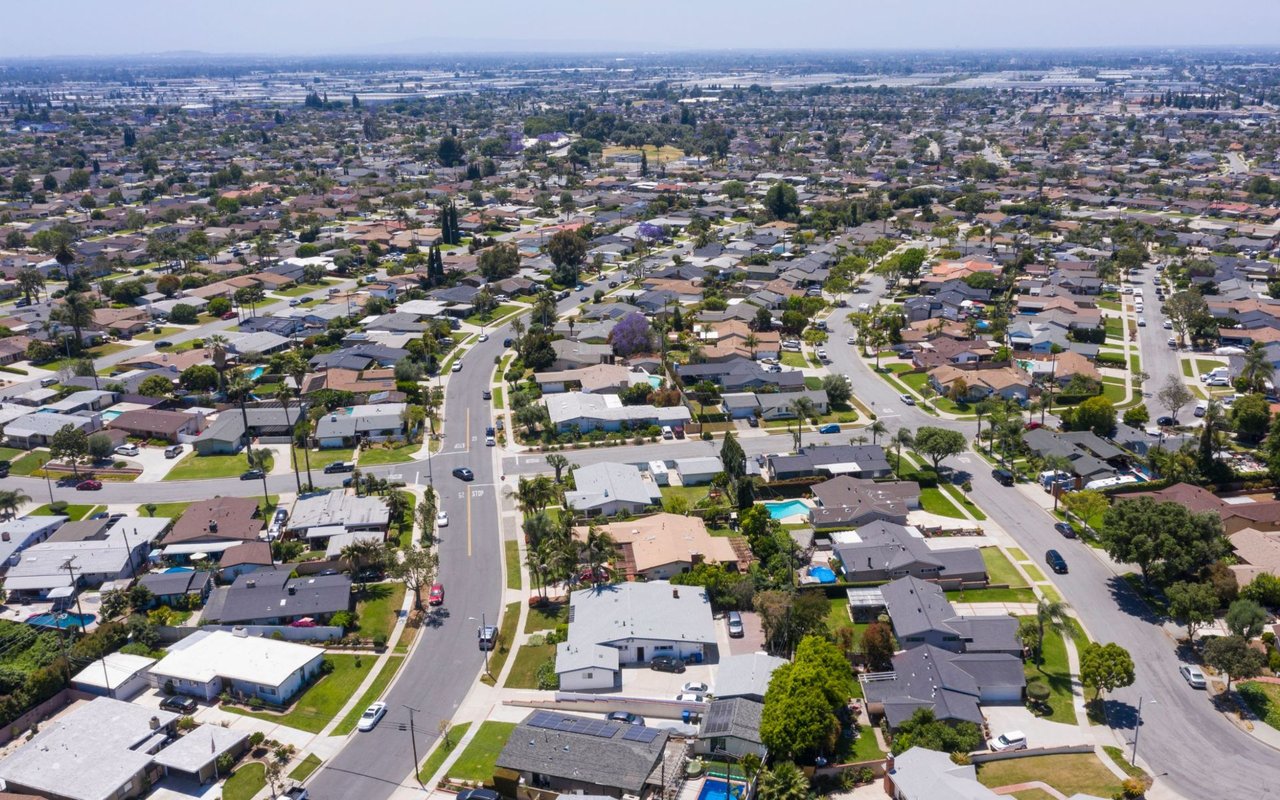
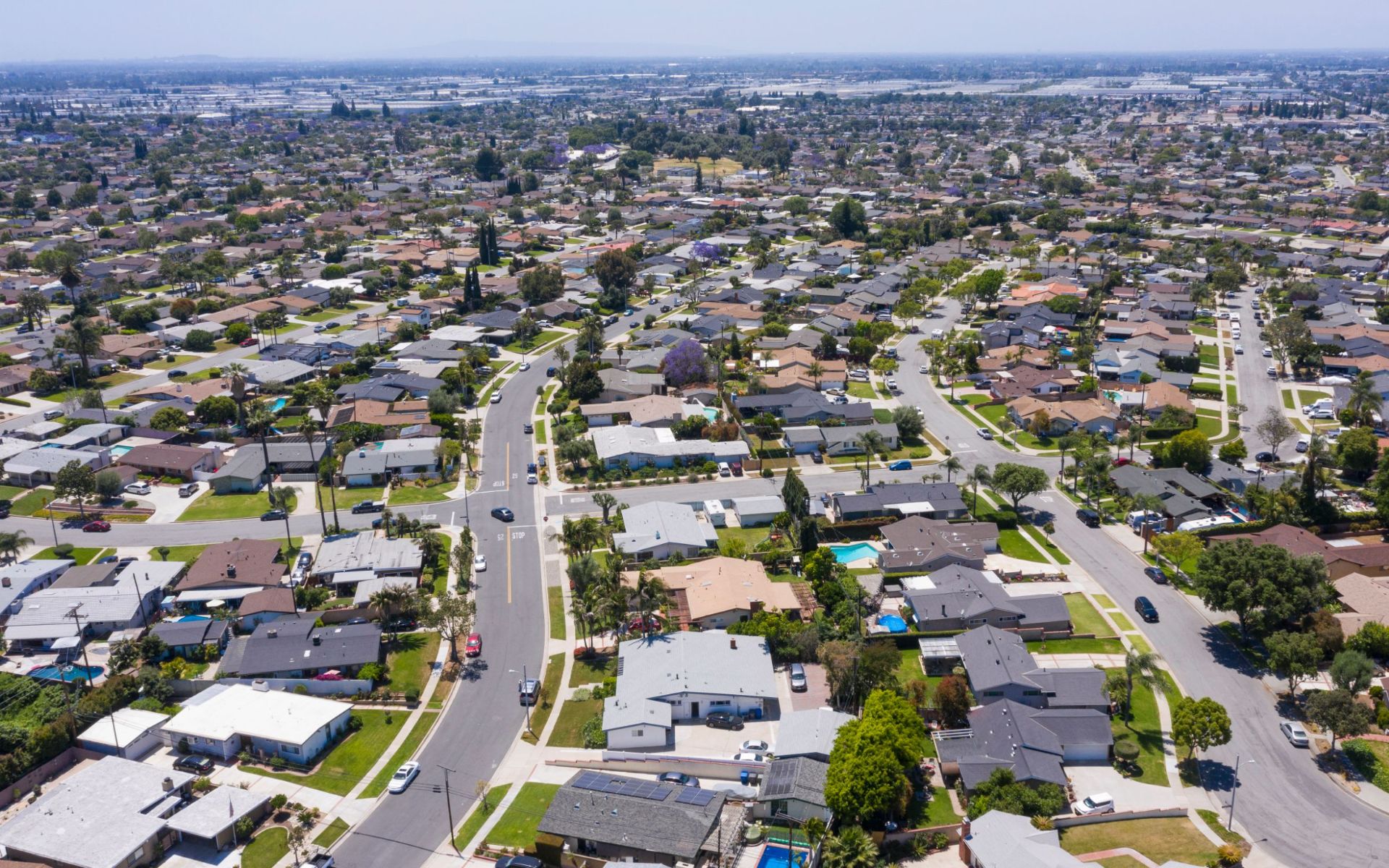
The city feels planned in the best sense. Most of the housing stock is post-1960 single-family homes on modest lots, well-maintained, tree-lined, and organized around cul-de-sacs and neighborhood parks. There are no dramatic topographic features or major commercial districts cutting through the residential fabric. What draws buyers here is consistency: good neighborhoods, safe streets, reliable schools, and practical access to two of Southern California's biggest job markets.
La Mirada is best for buyers who want a safe, established suburban community with practical access to two counties. It offers the calm of a quiet residential city alongside the convenience of being close to both the LA and Orange County job markets, major attractions, and everyday amenities.
La Mirada's history begins long before its incorporation. The area was home to the Luiseño and Gabrielino (Tongva) peoples before Spanish colonization, and the land later became part of early California ranchos. The name ties to a Southern Pacific Railroad station built in 1888 to serve the growing route between Los Angeles and San Diego. That station, called La Mirada (Spanish for "the look" or "the gaze"), gave the area its enduring identity.
Through the early 20th century, the area remained largely agricultural, with ranching and citrus farming shaping the landscape. The Neff Estate was among the notable early landholdings that defined the pre-urban character of the region. Everything changed after World War II, when Southern California's suburban expansion reached the southeastern Los Angeles basin and residential development transformed farmland into neighborhoods almost overnight.
La Mirada incorporated on March 23, 1960, initially under the name Mirada Hills before voters changed it to La Mirada later that same year. The 1960s and 1970s brought rapid residential growth as families moved in, the local mall opened in 1961, and Biola University relocated its campus to La Mirada in 1959, giving the city a permanent anchor of higher education. The La Mirada Theatre for the Performing Arts opened in 1977, inaugurated by Tony Bennett, and quickly became one of the region's most celebrated mid-size performance venues.
The La Mirada Theatre for the Performing Arts has hosted award-winning Broadway productions, musical acts, and community performances since 1977. It remains one of the most important cultural institutions in southeastern Los Angeles County and a genuine point of community pride.
La Mirada's access is built around Interstate 5, which runs through the city on its western edge. That puts commuters in a strong position for reaching downtown Los Angeles to the north, Anaheim and the broader Orange County corridor to the south, and the connection points for SR-91, I-605, and I-105. Most residents drive, but the city operates La Mirada Transit, a curb-to-curb shared ride service for local trips and connections to regional rail. Two Metrolink stations in neighboring Norwalk and Buena Park serve as the closest rail access points for longer commutes.
La Mirada Transit offers curb-to-curb shared ride service Monday through Friday from 6:30 a.m. to 6 p.m. and Saturdays from 9:30 a.m. to 4 p.m., with connections to Metrolink and the Metro Green Line. Full fare is $1.00, with discounts for seniors, disabled riders, and children under five. The city also maintains connections to the Norwalk Transit System and regional park-and-ride facilities at nearby freeway interchanges.
La Mirada is a mid-to-upper suburban market dominated by single-family homes. The housing stock is mostly post-1960 construction, with a range of modest three-bedroom ranch homes to larger updated properties in the $900,000 to $1 million-plus range. Condos and townhomes are available but represent a smaller share of the market, making La Mirada primarily a single-family destination.
Recent data shows median home sale prices in the high $800,000s to low $900,000s, with strong year-over-year appreciation. Homes have been selling in under 30 days in competitive periods, reflecting consistent buyer demand. The market is tight: inventory is limited and buyers who find the right property tend to move quickly. La Mirada's price point sits below coastal LA neighborhoods while still reflecting proximity to two major employment regions.
La Mirada does not have large condo towers, active adult communities, or significant new construction. It is a market for buyers who want an established residential neighborhood with good bones and long-term stability. Sellers tend to see consistent demand, and well-priced homes in the right parts of the city regularly receive multiple offers.
La Mirada pricing reflects its dual-county access. Buyers get more square footage and lot size than they would in comparable coastal LA or Orange County markets, while staying close enough to both to commute comfortably.
La Mirada's lifestyle is centered on community, convenience, and a calm residential pace. It is not a nightlife destination or a tourist hub. What it offers instead is a genuinely livable suburban environment with excellent civic infrastructure. The city takes its parks, aquatics center, performing arts venue, and golf course seriously, and residents regularly mention these as meaningful reasons they chose to stay.
Opened in 1977 by Tony Bennett, this is one of the most respected mid-size performing arts venues in Southern California. It hosts Broadway productions, musicals, concerts, and community events throughout the year.
A full-scale public aquatics facility with pools, water slides, and year-round programming for all ages. It is one of the city's most popular amenities and draws families from throughout the region.
The city's largest park, featuring open lawns, picnic areas, sports facilities, walking paths, and access to the golf course. It serves as the central outdoor gathering space for the community.
An 18-hole public course within La Mirada Regional Park. It is a well-used local amenity and adds to the city's strong parks and recreation profile.
A private, nondenominational Christian university with a 96-acre campus in La Mirada. It brings a steady academic community presence to the city and hosts cultural events and performances open to the public.
Disneyland, Knott's Berry Farm, Angel Stadium, Honda Center, OC beaches, and the full range of LA cultural and entertainment options are all within a short drive from La Mirada.
La Mirada is well-equipped for daily life. The city has solid retail and dining options, a strong parks and recreation program, and healthcare access nearby. For broader shopping and entertainment, residents often head to Cerritos, Brea, Whittier, or La Habra, all of which are a short drive away. The city itself does not have a large commercial downtown, but its civic infrastructure is consistently well-maintained and community-oriented.
La Mirada's amenities punch above what you might expect from a city of its size. The theatre, the aquatics center, the regional park, and the golf course give it a civic infrastructure that most similarly sized suburban communities lack.
La Mirada is a compact city, and most of it is residential. The differences between areas tend to be subtle: proximity to parks, school zone assignment, the era and style of housing, and whether the streets connect directly to busier corridors or feel tucked into a quieter interior. Some of the commonly referenced neighborhoods include Lemon Hills, Hillsborough, Hawks Pointe, Green Hills, Foster Park, Creek Park, and Granada Heights.
Established residential pockets known for well-kept homes, tree-lined streets, and a quiet neighborhood character that draws families and long-term residents.
Charming single-family home neighborhoods with reasonable prices relative to the broader market and good access to local parks and schools.
Home to St. Paul of the Cross School, Foster Park is a family-friendly area with a strong Catholic community presence and access to both public and private school options.
Northern La Mirada neighborhoods that fall within different school districts (East Whittier City and Whittier Union). Buyers here should verify school assignment carefully.
Homes closest to the regional park benefit from easy access to the golf course, aquatics center, and open green space. These locations are among the most valued in the city.
The streets surrounding Biola Avenue and the university campus see a mix of owner-occupied homes and rental properties, with a younger demographic and strong walkability to campus resources.
Schools in La Mirada are served by more than one district, which is important for buyers to understand before committing to a property. Most of the city falls within the Norwalk-La Mirada Unified School District (NLMUSD), which serves La Mirada, Norwalk, and parts of Santa Fe Springs. Northern neighborhoods like Creek Park and Granada Heights fall under the East Whittier City School District for grades K through 8 and the Whittier Union High School District for high school. Several private schools and Biola University also serve the community.
Because La Mirada is served by multiple school districts, buyers should confirm exactly which district and schools serve any specific property before purchasing. The district assignment is address-dependent and can differ block by block in some parts of the city, particularly along the northern border areas.
Biola University adds a meaningful dimension to La Mirada beyond K-12 education. It brings a steady academic presence, campus cultural events open to the public, and a community of students and faculty who contribute to the city's character.
La Mirada's investment case is built on consistent suburban demand, limited land supply, and a location between two of Southern California's strongest employment regions. The city does not add major new housing inventory, and its compact 7.82-square-mile footprint means supply stays tight. Buyers who choose properties in strong school zones with good access to I-5 have historically seen steady appreciation and reliable long-term interest from owner-occupants and renters alike.
La Mirada is not a market where investors flip quickly or speculators chase volatile returns. It is a market where patient buyers who select well-located properties in stable neighborhoods see reliable long-term appreciation backed by real household demand. The city's size, safety, and access advantages are not easily replicated.
For long-term buyers, La Mirada offers something difficult to find in Southern California: a safe, established suburban city in a prime dual-county location, with a limited supply of housing and consistent demand from families, commuters, and Biola University affiliates.
La Mirada draws buyers who have done their homework on Southern California geography. They know the city is close to everything that matters while offering a calm, residential environment that coastal urban neighborhoods cannot. From commuters to families to retirees, the city tends to attract people who value stability and practicality.
La Mirada's I-5 access and position on the LA/OC border make it a practical base for professionals working in either county. Nearby Metrolink stations add a rail option for busier commute days.
Safe streets, community parks, the aquatics center, and multiple school district options make La Mirada a strong fit for families who want a settled residential environment for raising children.
The La Mirada Theatre for the Performing Arts and Biola University's campus programming give the city a genuine cultural life uncommon in cities of its size.
While prices have risen, La Mirada offers more square footage and lot size than comparable coastal markets at similar price points. Entry-level condos and smaller homes provide a path into a stable, desirable area.
La Mirada Regional Park, the golf course, Splash! Aquatics Center, and proximity to OC beaches and LA recreation make it a well-rounded choice for buyers who spend time outdoors.
Limited housing supply, consistent demand, a safety-first community culture, and a location between two major employment hubs support the long-term ownership case in La Mirada.
Where is La Mirada, CA located?
La Mirada is in southeastern Los Angeles County, right on the Orange County border. It is approximately 20 miles southeast of downtown Los Angeles, 15 miles northwest of Santa Ana, and about 12 miles from Anaheim.
What does La Mirada mean?
La Mirada is Spanish for "the look" or "the gaze." The name was given to a Southern Pacific Railroad station built in 1888 to serve the route between Los Angeles and San Diego. The city adopted the name when it incorporated in 1960.
What is the real estate market like in La Mirada?
La Mirada is a competitive suburban market with limited inventory and consistent demand. The median home sale price was approximately $885,000 in late 2025, up about 10.3% year-over-year. Most of the market is single-family homes; condos and townhomes are available but represent a smaller share.
What schools serve La Mirada?
Most of La Mirada is served by the Norwalk-La Mirada Unified School District, which includes La Mirada High School as the city's primary public high school. Northern neighborhoods fall under the East Whittier City School District for K-8 and the Whittier Union High School District for high school. Private options include St. Paul of the Cross School, and Biola University serves higher education needs.
Is La Mirada safe?
La Mirada is consistently regarded as one of the safer cities in Los Angeles County. Its low crime rate and community-oriented character are frequently cited by residents and real estate professionals as among its strongest selling points.
Is there public transportation in La Mirada?
Yes. The city operates La Mirada Transit, a curb-to-curb shared ride service available Monday through Saturday with connections to Metrolink and the Metro Green Line. The closest Metrolink stations are Norwalk/Santa Fe Springs and Buena Park. Most residents rely on personal vehicles for daily needs.
What is Biola University?
Biola University is a private, nondenominational evangelical Christian university located on a 96-acre campus in La Mirada. Founded in 1908 as the Bible Institute of Los Angeles, it relocated to La Mirada in 1959 and offers undergraduate and graduate programs across a wide range of disciplines. It is one of the leading Christian universities in the United States.
Who is La Mirada best suited for?
La Mirada is a strong fit for LA and OC commuters, families who value safety and school access, buyers who want a quiet suburban lifestyle within reach of two major counties, and long-term owners who prioritize stability and consistent demand in a well-established city.
45,714 people live in La Mirada, where the median age is 43.7 and the average individual income is $42,726. Data provided by the U.S. Census Bureau.
Total Population
Median Age
Population Density Population Density This is the number of people per square mile in a neighborhood.
Average individual Income
There's plenty to do around La Mirada, including shopping, dining, nightlife, parks, and more. Data provided by Walk Score and Yelp.
Explore popular things to do in the area, including Marcus Perry Fitness, Lashes by Helen, and Rae Ann Talavera Electrolysis.
| Name | Category | Distance | Reviews |
Ratings by
Yelp
|
|---|---|---|---|---|
| Active | 2.99 miles | 11 reviews | 5/5 stars | |
| Beauty | 4.12 miles | 6 reviews | 5/5 stars | |
| Beauty | 1.91 miles | 16 reviews | 5/5 stars | |
| Beauty | 4.12 miles | 5 reviews | 5/5 stars | |
| Beauty | 3.12 miles | 6 reviews | 5/5 stars | |
|
|
||||
|
|
||||
|
|
||||
|
|
||||
|
|
||||
|
|
La Mirada has 15,120 households, with an average household size of 2.98. Data provided by the U.S. Census Bureau. Here’s what the people living in La Mirada do for work — and how long it takes them to get there. Data provided by the U.S. Census Bureau. 45,714 people call La Mirada home. The population density is 5,899 and the largest age group is Data provided by the U.S. Census Bureau.
Total Population
Population Density Population Density This is the number of people per square mile in a neighborhood.
Median Age
Men vs Women
Population by Age Group
0-9 Years
10-17 Years
18-24 Years
25-64 Years
65-74 Years
75+ Years
Education Level
Total Households
Average Household Size
Average individual Income
Households with Children
With Children:
Without Children:
Marital Status
Blue vs White Collar Workers
Blue Collar:
White Collar: