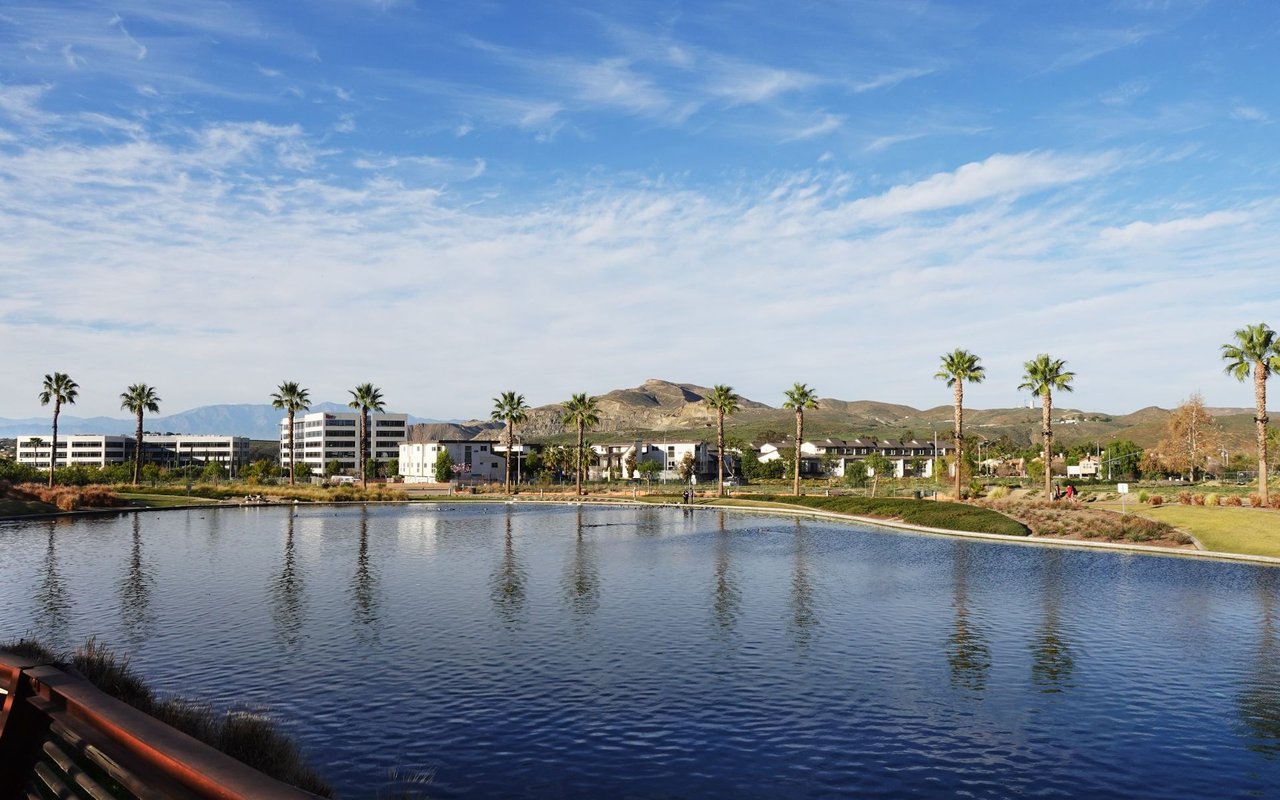
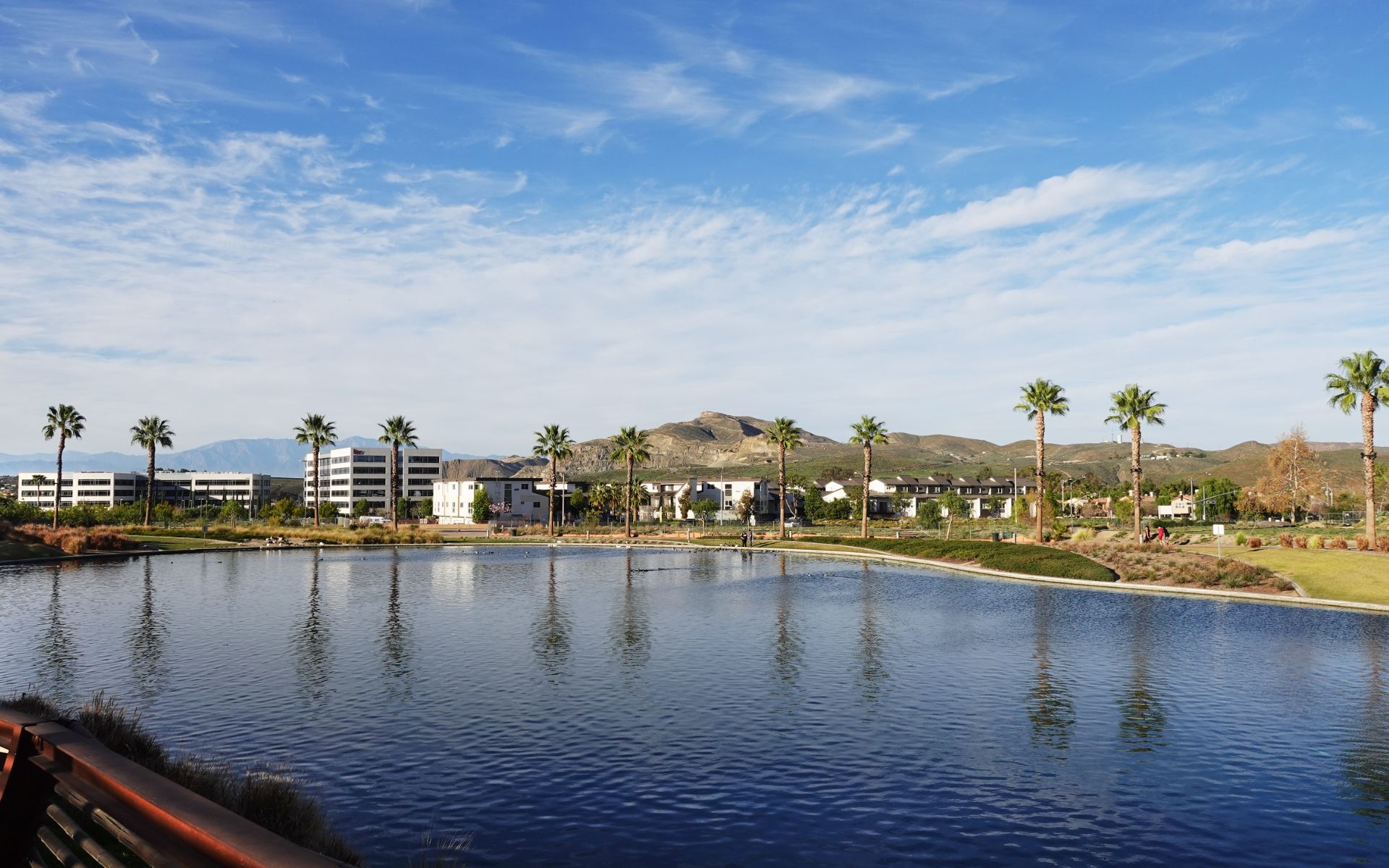
Corona is one of the Inland Empire's most sought-after cities, sitting at the western edge of Riverside County where the Santa Ana Mountains meet Southern California's sprawling suburbs. It is well-connected, family-friendly, and growing, with a wide range of housing from historic downtown bungalows to newer master-planned communities with golf courses and foothill views.
The city earned the nickname "Circle City" thanks to its one-of-a-kind circular Grand Boulevard, designed in 1887 and still one of Corona's most recognizable features. Originally known as South Riverside, Corona incorporated in 1896 and built its early identity around citrus farming. Today it is home to roughly 163,000 residents across six ZIP codes, with easy freeway access, two Metrolink stations, and a price point that continues to draw buyers priced out of neighboring Orange County.
This guide covers Corona's history, neighborhoods, real estate market, schools, amenities, transportation, and what makes it a strong fit for buyers at different stages of life.
Corona Lifestyle Snapshot
An editorial snapshot of the community's strongest lifestyle attributes, not a statistical ranking.
Corona is a city built for people who want space, community, and practical access to Southern California's major job centers without paying Orange County prices. It sits right where SR-91 and I-15 meet, which makes it one of the most connected spots in the Inland Empire. Residents can reach Anaheim, Irvine, and other Orange County hubs in 30 to 45 minutes on a good day, or hop on Metrolink to skip the freeway entirely.
What sets Corona apart from other Inland Empire cities is its range. You can find a starter condo near downtown, a mid-size family home in a master-planned community, or a premium estate with golf course frontage and mountain views, all within the same city. Neighborhoods like Eagle Glen, Dos Lagos, Sierra del Oro, and Chase Ranch have given Corona a strong reputation among families, and the city's school district is consistently one of the most well-regarded in Riverside County.
Corona is best for buyers who want Southern California convenience without the Orange County price tag. The city offers a genuine suburban lifestyle with strong schools, well-maintained communities, natural scenery, and commuter infrastructure that keeps LA and OC within reach.
Corona's history begins in 1886, when a group of land developers purchased land and established a community they called South Riverside. Engineer H.C. Kellogg was brought in to design the layout, and his most lasting contribution was Grand Boulevard, a three-mile circular road that gave the city its defining shape and its famous nickname: the Circle City. The circular plan was practical and symbolic, organizing the city's schools, churches, homes, and stores inside the loop while agricultural lands and rail facilities sat at the edges.
The city incorporated in 1896 and changed its name to Corona, which is Spanish for "crown." By the early 1900s, Corona had grown into a significant citrus production center, earning the nickname "Lemon Capital of the World." Packing houses, rail lines, and the Sunkist cooperative shaped the city's economy well into the mid-20th century. The Corona Lemon Co. and similar operations became national suppliers of citrus products, and the Heritage Park and Museum still preserves that history today.
Grand Boulevard became famous for another reason in the early 1900s when it hosted three international automobile races between 1913 and 1916. The races drew thousands of spectators and put Corona on the national map, though they were discontinued after a fatal accident. The Riverside Freeway (SR-91) came through Corona in 1962, connecting the city to Orange County and accelerating its transformation from an agricultural town into one of the Inland Empire's most desirable suburban communities.
Corona Heritage Park and Museum at 510 W. Foothill Parkway preserves the city's history from its founding in 1886 through the mid-20th century, including exhibits on the citrus industry, the Circle City design, and early community life.
Corona sits at the junction of SR-91 and I-15, two of Southern California's major freeway corridors. That position gives residents direct connections to Orange County to the west, San Bernardino County to the north, and San Diego County to the south. The city also has access to SR-71, which connects to the Pomona area. Two Metrolink rail stations serve Corona, offering an alternative to freeway commuting, especially for those heading to Los Angeles Union Station or Orange County rail stops.
For buyers who commute to Orange County regularly, Corona's location along SR-91 is both an advantage and a consideration. The freeway saves significant time compared to commuting from deeper in the Inland Empire, but the 91 corridor is known for congestion during peak hours. Many residents use Metrolink on high-traffic days or adjust departure times to manage commute variability. The Riverside Transit Agency and the Corona Cruiser local bus also serve the city for shorter trips and connections.
Corona's real estate market covers a wide price range, which is part of its appeal. Buyers can enter at the mid-$400s for condos or townhomes near downtown, find well-sized family homes in the $700,000 to $900,000 range across most neighborhoods, and reach premium estate pricing above $1 million in communities like Eagle Glen, Chase Ranch, and parts of Sierra del Oro. That range means Corona works for first-time buyers, move-up buyers, and families coming from higher-priced coastal markets.
As of June 2026, the median listed home price in Corona was approximately $775,000, with homes spending a median of around 67 days on the market. The city's relative affordability compared to Orange County remains one of its most consistent draws, and demand in family-centered neighborhoods with strong schools stays steady. Inventory is broader here than in smaller communities, giving buyers more options to compare.
Buyers should factor in HOA fees, Mello-Roos assessments, and property tax bonds when comparing neighborhoods. These vary widely across Corona and can shift the true monthly cost of homeownership by several hundred dollars. Working with a local agent who knows specific communities is especially useful here.
Corona offers one of the most accessible entry points into Southern California homeownership for buyers priced out of Orange County. The same budget that buys a small condo in Irvine can buy a full-sized family home in a well-maintained Corona neighborhood with strong schools.
Corona's lifestyle is suburban in the best sense: organized, convenient, and built around families, outdoor access, and everyday comfort. Residents are close to nature without sacrificing access to retail, dining, and entertainment. The city has over 40 parks, multiple golf courses, trailheads into the Cleveland National Forest, and the Santa Ana River Trail for cycling and walking. On weekends, families head to the Skyline Drive Trail for panoramic views, or to Glen Ivy Hot Springs for a day of relaxation.
A lakefront shopping and dining destination in South Corona with restaurants, a movie theater, boutique retail, and community events. It is the city's most popular gathering hub for residents of all ages.
One of the most popular local hikes, offering panoramic views of the Inland Empire and surrounding mountains. It sits at the edge of the Santa Ana Mountains and draws residents year-round for morning walks and weekend outings.
A well-known day spa and hot springs retreat just south of the city in Temescal Canyon. It is a local favorite for unwinding, with mineral pools, mud baths, and spa services.
The original circular road designed in 1887 still defines downtown Corona. It is a functional road, a historic landmark, and a point of local pride that sets Corona apart from every other city in the country.
The national forest begins just east of the city, giving residents access to hiking, mountain biking, and open space that most suburban communities cannot match. Trails range from easy nature walks to challenging ridge hikes.
Corona hosts a Summer Concert Series, a Holiday Parade, food truck nights, farmers markets, and annual festivals throughout the year. The city's diverse population contributes to a lively and varied event calendar.
Corona is well-stocked for day-to-day living. The Crossings at Corona and the Shops at Dos Lagos cover most retail, dining, and entertainment needs, while the downtown area adds local flavor with independent restaurants, craft breweries, and community businesses. Healthcare is anchored by Corona Regional Medical Center, and the city has multiple library branches, senior centers, and community sports facilities.
Corona's amenity profile is thorough without being overwhelming. It has what a family needs day-to-day, plus easy access to the broader Southern California lifestyle whenever residents want something beyond city limits.
Corona is large enough to have real neighborhood differences. South Corona, with its newer master-planned communities, draws families who want top-rated schools and foothill scenery. The historic downtown area suits buyers who prefer older homes with character and walkable access to local life. Dos Lagos and Eagle Glen appeal to buyers who want an elevated lifestyle with golf, lakes, and organized community amenities.
A well-planned community built around the Eagle Glen Golf Course, with Spanish and Mediterranean-style homes, mountain views, community parks, and some of the city's highest-rated schools nearby.
A lakefront master-planned neighborhood centered around the Shops at Dos Lagos. It offers modern condos and single-family homes within walking distance of retail, dining, and the community lake.
A popular family neighborhood in South Corona with top-rated schools, community parks, newer construction, and quick freeway access. It is one of the most sought-after areas in the city for families.
An established South Corona community known for large lots, quiet streets, and strong school zoning. It draws buyers who want more space and a premium feel without moving into a fully gated community.
Older Craftsman, ranch-style, and mid-century homes sit near the iconic Grand Boulevard circle. It is the most walkable part of the city, with local restaurants, Metrolink access, and a distinct historical character.
Newer construction, more open space, and a quieter pace at the southern edge of the city. It is close to Glen Ivy Hot Springs, the 15 Freeway, and growing retail serving new residents in this corridor.
Schools are one of Corona's strongest draws for families. The Corona-Norco Unified School District (CNUSD) is the largest public school district in Riverside County and one of the largest in California, serving over 53,000 students across Corona, Norco, and Eastvale. Several of its schools consistently earn high ratings, and the district has been recognized as one of California's Exemplary School Districts. High schools like Eleanor Roosevelt, Centennial, and Santiago are well-regarded for academics, athletics, and career programs.
School assignment in Corona depends on the specific address, so buyers who prioritize a particular school or feeder pattern should verify enrollment eligibility before purchasing. Neighborhoods zoned for top-rated elementary and middle schools tend to see stronger demand and more competitive pricing.
CNUSD is one of the primary reasons families choose Corona over other Inland Empire cities. For buyers whose home search is school-driven, working with an agent who knows which homes fall in which school zones can make a real difference.
Corona's investment case rests on affordability relative to its coastal neighbors, steady population growth, strong school demand, and infrastructure that keeps the city connected to major employment centers. Buyers who purchase in well-located neighborhoods with good schools and freeway access have historically seen consistent demand from both owner-occupants and renters.
Homes near top-rated schools, Metrolink stations, or in master-planned communities with amenities tend to hold value well and attract consistent buyer interest even when the broader market softens. First-time investors should pay close attention to HOA restrictions and Mello-Roos obligations, which are common in newer developments and can affect cash flow calculations significantly.
For long-term buyers, Corona rewards patience and neighborhood selection. Choosing a home in a well-rated school zone with good freeway access has historically been one of the strongest investment strategies in the Inland Empire.
Corona attracts a wide range of buyers, from Orange County commuters seeking more space for their budget, to families who want excellent schools and a strong community feel, to buyers who simply want a well-rounded Southern California life without the coastal premium. The city has room for all of them.
Corona's position at SR-91 and I-15, plus two Metrolink stations, makes it one of the most practical places to live for professionals commuting to Anaheim, Irvine, and Los Angeles daily.
The Cleveland National Forest, Skyline Drive Trail, Santa Ana River Trail, Glen Ivy Hot Springs, and multiple golf courses make outdoor recreation a genuine part of everyday life here.
CNUSD is the largest and one of the most well-regarded public school districts in Riverside County. Neighborhoods like Eagle Glen, Sierra del Oro, and Chase Ranch add community parks, safe streets, and organized amenities.
Corona offers one of the most realistic paths to homeownership in Southern California, with entry-level condos and townhomes available in the mid-$400s and family homes well below coastal market equivalents.
Premium communities like Eagle Glen and Chase Ranch deliver the space, setting, and amenities of a higher-tier market at prices that remain below comparable Orange County alternatives.
Consistent population growth, strong school demand, improving infrastructure, and a location between two major employment regions support the long-term case for owning in well-chosen Corona neighborhoods.
Where is Corona, CA located?
Corona is located in western Riverside County, California, at the intersection of SR-91 and I-15. It is roughly 48 miles southeast of Los Angeles, about 25 miles from Anaheim, and sits along the border with Orange County.
Why is Corona called the Circle City?
Corona earned the nickname because of Grand Boulevard, a three-mile circular road designed by engineer H.C. Kellogg in 1887. The road forms a perfect one-mile-wide circle at the heart of the city and remains a functioning road and local landmark today.
What is the real estate market like in Corona?
Corona has a broad market that serves buyers at many price points. As of June 2026, the median listed home price was approximately $775,000, with condos available from the mid-$400s and premium community homes reaching $1 million or more. Homes were spending a median of about 67 days on the market.
How far is Corona from Orange County?
Anaheim is roughly 25 miles west of Corona via SR-91. Drive times typically run 30 to 50 minutes, though the 91 Freeway can be heavily congested during morning and evening peak hours. Many residents also use Metrolink to commute to Orange County without dealing with freeway traffic.
Is there public transportation in Corona?
Yes. Corona has two Metrolink commuter rail stations, North Main Corona and West Corona, with service toward Los Angeles and Orange County. The Riverside Transit Agency and the Corona Cruiser local bus system also serve the city. Most residents drive for everyday errands, but Metrolink is a practical option for work commutes.
What schools serve Corona?
Most Corona students attend schools in the Corona-Norco Unified School District (CNUSD), which is the largest public school district in Riverside County. Highly regarded high schools include Eleanor Roosevelt, Centennial, Santiago, and Corona High. Buyers should confirm school assignment by address before purchasing, as zoning boundaries vary across the city.
What are the best neighborhoods in Corona for families?
Eagle Glen, Sierra del Oro, Chase Ranch, and South Corona are frequently cited as top family neighborhoods for their school access, parks, safety, and community feel. Dos Lagos is popular with buyers who want a lifestyle-oriented community with walkable retail and dining nearby.
Who is Corona best suited for?
Corona is a strong fit for OC and LA commuters, families seeking top schools, first-time buyers who want to enter the Southern California market, and move-up buyers looking for more space than coastal markets allow. It is also a solid choice for long-term owners who value stable demand and consistent infrastructure investment in a growing city.
262,651 people live in Corona, where the median age is 37.3 and the average individual income is $42,629. Data provided by the U.S. Census Bureau.
Total Population
Median Age
Population Density Population Density This is the number of people per square mile in a neighborhood.
Average individual Income
There's plenty to do around Corona, including shopping, dining, nightlife, parks, and more. Data provided by Walk Score and Yelp.
Corona has 76,135 households, with an average household size of 16.96. Data provided by the U.S. Census Bureau. Here’s what the people living in Corona do for work — and how long it takes them to get there. Data provided by the U.S. Census Bureau. 262,651 people call Corona home. The population density is 3,517 and the largest age group is Data provided by the U.S. Census Bureau.
Total Population
Population Density Population Density This is the number of people per square mile in a neighborhood.
Median Age
Men vs Women
Population by Age Group
0-9 Years
10-17 Years
18-24 Years
25-64 Years
65-74 Years
75+ Years
Education Level
Total Households
Average Household Size
Average individual Income
Households with Children
With Children:
Without Children:
Marital Status
Blue vs White Collar Workers
Blue Collar:
White Collar: