Chino Hills is one of the most distinctive communities in the Inland Empire, sitting at the southwestern corner of San Bernardino County where the hills meet four counties at once. It borders Los Angeles, Orange, and Riverside counties, which gives it a geographic position that is genuinely rare: residents can reach the beaches of Orange County, the job centers of the San Gabriel Valley, or the shopping corridors of the Inland Empire within a similar drive time.
The city incorporated on December 1, 1991, after years of rapid residential growth transformed what had been cattle ranches and dairy farms into master-planned neighborhoods. Today Chino Hills is known for its rolling hills, high household incomes, strong schools, well-organized neighborhoods, and access to Chino Hills State Park, one of the largest urban wilderness parks in California. The name comes from the Chino Hills mountain range and the Spanish word for "curly," a reference to the area's terrain.
This guide covers Chino Hills' history, neighborhoods, real estate market, schools, amenities, transportation, and what makes it a compelling choice for buyers at different stages of life.
Chino Hills Lifestyle Snapshot
An editorial snapshot of the community's strongest lifestyle attributes, not a statistical ranking.
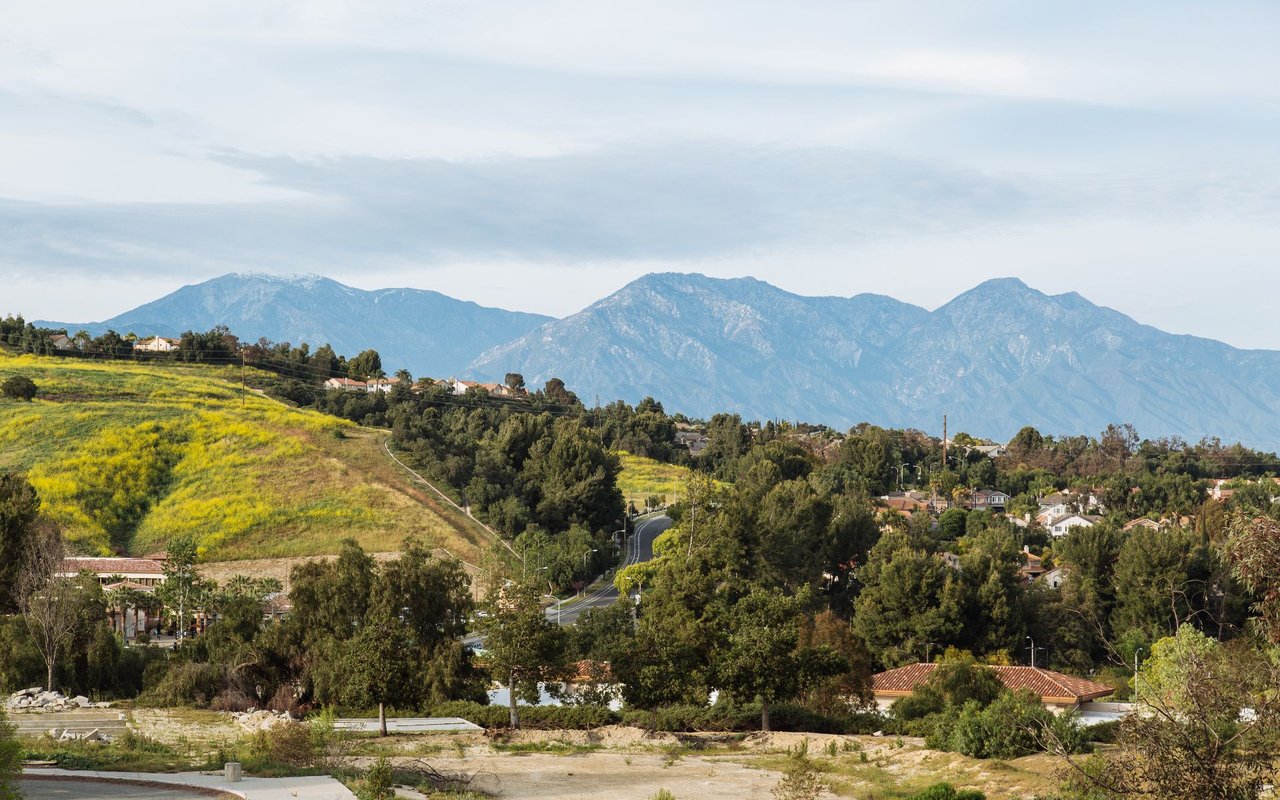
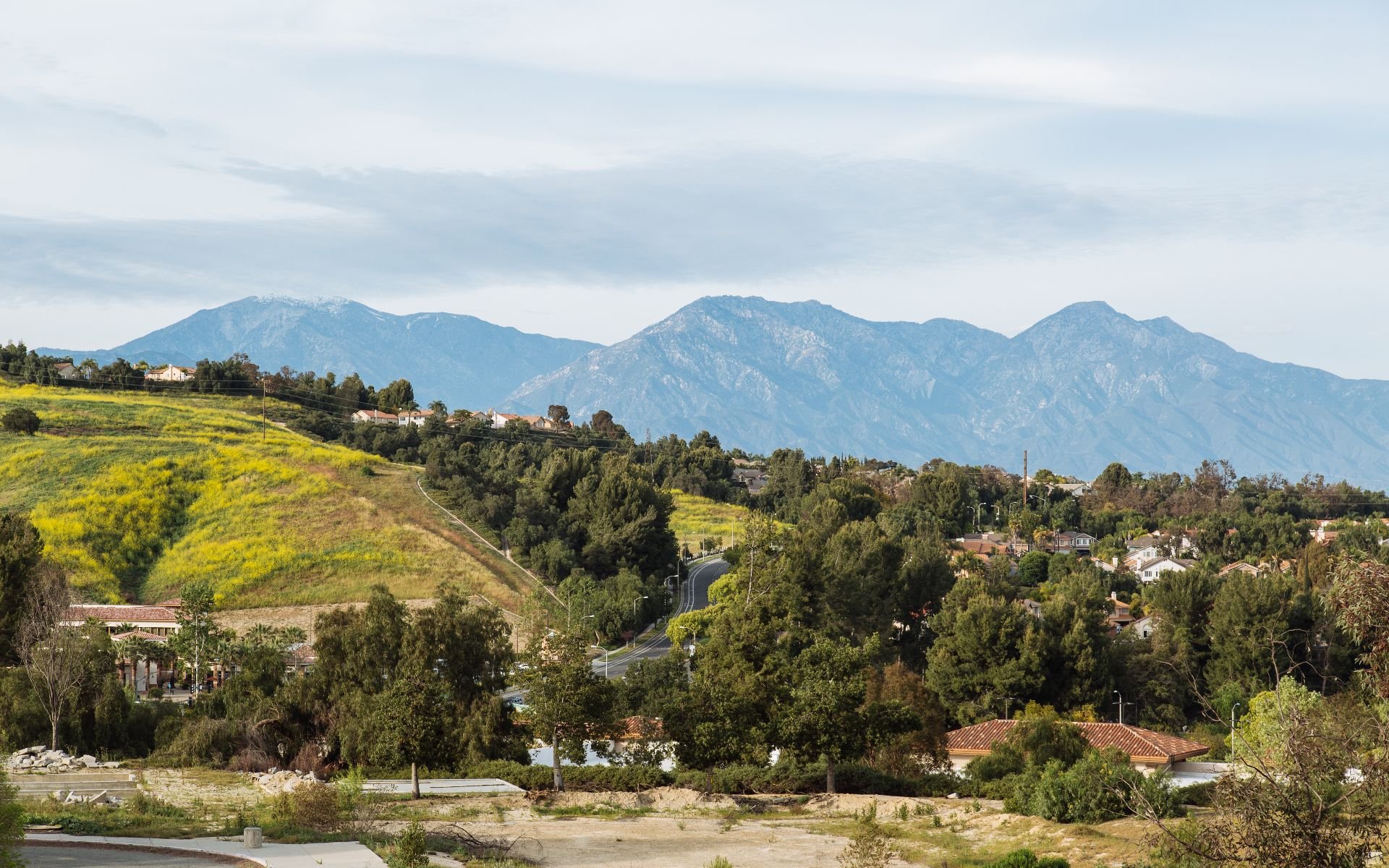
Chino Hills is a city that grew fast and grew intentionally. When incorporation came in 1991, residents chose it specifically because they wanted to shape how the community developed rather than let county planning do it for them. The result is a city with a strong master-planned feel: greenbelts between neighborhoods, organized community parks, preserved open space, and a consistent residential character that holds up across most of the city's 44 square miles.
What distinguishes Chino Hills within the Inland Empire is its combination of elevation, scenery, and income level. The median household income sits at around $126,000, among the highest in San Bernardino County, and the city's demographic profile is notably diverse, with a large and well-established Asian American community that now makes up roughly 41% of the population. That diversity shows in the schools, the local dining scene, and the community's overall character.
Chino Hills is best for buyers who want an affluent, nature-connected suburban lifestyle with strong schools, a diverse community, and freeway access to multiple Southern California employment regions. It offers rolling hills and preserved open space in a way few Inland Empire cities can match.
Before suburbs arrived, the land that became Chino Hills was ranch and agricultural territory. The Tongva village of Wapijanga once existed in the area, and the land later passed through Spanish colonial hands, becoming part of the broader Chino rancho system. Through the 19th century and into the 20th, cattle grazing and dairy farming dominated the rolling terrain. The area was largely untouched by residential development until population pressure from surrounding counties made it an obvious destination.
Development began in earnest during the late 1970s and through the 1980s, as buyers from Los Angeles, Orange County, and Riverside sought more affordable housing with room to breathe. Developers and planners saw the potential of the hills and began laying out master-planned communities: Butterfield Ranch, Rolling Ridge, Fairfield Ranch, Payne Ranch, and others followed in sequence. The Vellano Country Club, designed by golf champion Greg Norman as his first project in Greater Los Angeles, came later and added a premium segment to the city's housing landscape.
Residents pushed for incorporation to control the pace and character of growth. On December 1, 1991, Chino Hills officially became a city, one of the newer cities in San Bernardino County. The city's approach to development since then has emphasized greenbelts, open space preservation, and the kind of planned community standards that keep neighborhoods looking well-maintained. The McCoy Equestrian and Recreation Center preserves a nod to the city's ranching past, and Chino Hills State Park ensures that a significant portion of the surrounding land remains wild and accessible.
Chino Hills State Park, which borders much of the southern and western portions of the city, covers over 14,000 acres and connects the communities of Chino Hills, Yorba Linda, Brea, and Corona. It offers miles of trails for hiking, mountain biking, and horseback riding, and it is one of the largest urban wilderness parks in California.
Chino Hills is accessed primarily via SR-71, which runs north-south through the city and connects to SR-60 toward Pomona and the San Gabriel Valley and to SR-91 toward Corona and Orange County. Chino Hills Parkway (SR-142) runs east-west and links the city to Carbon Canyon Road toward Brea. Most daily travel in Chino Hills is by car, and the city's hilly terrain and master-planned layout make driving the most practical way to get around. Transit options are limited, though Metrolink stations in Chino and Pomona are reachable with a short drive.
OmniLink, operated by Omnitrans, provides dial-a-ride transit service within Chino Hills for those who prefer not to drive. For longer commutes by rail, the Metrolink stations in Chino and Pomona are both within a short drive and offer service toward downtown Los Angeles and connections to other Metrolink lines. Most Chino Hills residents commute by car to Orange County, the San Gabriel Valley, or other Inland Empire job centers, and peak-hour traffic on SR-71 and SR-91 should factor into any commute planning.
Chino Hills is firmly in premium Inland Empire territory. Single-family homes have crossed the $1 million median in recent years, with the average sale price for houses sitting around $1.2 million as of early 2026 data. The broader median across all home types, including condos, sits closer to $925,000 to $1,020,000 depending on the data source and time period. The city's combination of top-rated schools, scenic setting, and high household incomes keeps demand consistent even when broader market conditions soften.
The market is moderately competitive, with homes receiving roughly two offers on average and selling in 57 to 70 days. Inventory sits at roughly 3.4 months of supply, suggesting a relatively balanced market rather than the extreme seller's conditions seen in previous years. Condos and townhomes offer a lower entry point at around $596,000 to $625,000 and serve buyers who want to be in Chino Hills without committing to single-family pricing.
Chino Hills is not a starter-home market for most buyers. It is a destination for households with solid incomes who are prioritizing school quality, community character, and a setting that feels distinctly different from the flat suburban grids of other Inland Empire cities. Buyers who can meet the price point generally find consistent long-term value.
Chino Hills pricing reflects what the market consistently rewards: strong schools, a scenic setting, high household incomes, and a city that manages its growth carefully. Buyers pay a premium compared to neighboring Chino, but the difference in community character is meaningful and shows up in long-term demand.
Life in Chino Hills is oriented around family, the outdoors, and a well-organized suburban routine. Weekend mornings often mean hiking in Chino Hills State Park or youth sports tournaments; afternoons point toward The Shoppes at Chino Hills for dining, retail, and a movie. The city runs community events throughout the year including Concerts in the Park, an Independence Day Celebration, and an Annual Holiday Tree Lighting, all of which draw strong local turnout.
Over 14,000 acres of open space bordering the city, with miles of trails for hiking, mountain biking, and horseback riding. It connects Chino Hills to Yorba Linda, Brea, and Corona and is one of the largest urban wilderness parks in California.
The city's main retail and dining destination, with restaurants, boutiques, a movie theater, and community-facing amenities. It sits in the center of the city and serves as the primary gathering hub for residents.
A private golf course and gated residential community designed by Greg Norman, his first Greater Los Angeles project. It anchors the premium segment of the Chino Hills housing market and adds a resort-style option for buyers at the upper end.
A nod to the city's ranching roots, this community facility offers equestrian access, recreation programming, and open space for residents who want a connection to the land that predates suburban development.
English Springs Park is a local favorite for picnics and community events. Nearby Prado Regional Park adds fishing, boating, and camping in a natural lakeside setting, expanding recreation options just outside city limits.
Concerts in the Park, an Independence Day Celebration, a Holiday Tree Lighting, and seasonal community events bring residents together throughout the year. The city's Community Center hosts ongoing classes, leagues, and programming for all ages.
Chino Hills is well-supplied for suburban living. The Shoppes at Chino Hills anchors the city's retail and dining core, and additional shopping centers throughout the city handle everyday needs. Healthcare is accessible locally and at Ontario, Pomona, and Corona facilities nearby. For broader retail, specialty dining, and entertainment, residents often drive to Ontario Mills, Brea Mall, or the Chino area.
Chino Hills leans on nature and community more than commercial density. Its biggest amenity advantage is the combination of a walkable shopping center (The Shoppes), world-class state park access, and a rich recreation programming calendar that keeps residents engaged without needing to drive far.
Chino Hills is organized around distinct master-planned communities rather than traditional urban neighborhoods. Each subdivision has its own character, price range, proximity to schools, and relationship to the surrounding hills and open space. Understanding which community fits is an important part of buying here, because the differences in setting, elevation, age of housing, and amenity access are meaningful.
One of the city's most recognizable neighborhoods, in southern Chino Hills adjacent to the state park. Known for mountain views, quiet streets, strong school access, and a true community feel. Development started in the late 1980s and continued through the 1990s.
A gated hillside community centered on the Greg Norman-designed golf course. It represents the top tier of Chino Hills real estate with panoramic views, larger homes, and private amenities. The premium choice for buyers seeking an estate-level lifestyle.
A central Chino Hills community near Grand Avenue and Peyton Drive with strong access to The Shoppes and major roads. It draws families who want everyday convenience close to home alongside organized neighborhood amenities.
Well-established master-planned communities with consistent residential character, family-focused streets, and strong proximity to Chino Valley Unified schools. Represent the core of Chino Hills' single-family suburban offering.
An older community in the eastern part of the city near the Chino border, organized around the Los Serranos Country Club golf course. Housing here tends to be 1970s-80s vintage with larger lots and slightly lower prices than the city median.
Quieter hillside residential areas known for their family-oriented streets, proximity to schools, and a more tucked-away feel. Popular with buyers who want a slightly removed pace while staying within easy reach of city amenities.
Schools are one of the primary reasons families move to Chino Hills and one of the primary reasons they stay. The Chino Valley Unified School District (CVUSD) serves the entire city and covers approximately 26,000 students across Chino, Chino Hills, and part of Ontario. Several Chino Hills campuses earn A grades and high GreatSchools ratings, and the district's high schools offer strong college prep, career technical education pathways, and arts and athletics programs that compete at a high level.
As in all CVUSD communities, school assignment depends on the specific property address. Buyers who are making decisions based on a particular school or feeder pattern should verify enrollment eligibility directly with the district before committing to a purchase.
CVUSD schools in Chino Hills consistently rank among the best in San Bernardino County. For families who are school-driven in their home search, the city delivers a level of public school quality that is unusual at this price point compared to coastal California markets.
Chino Hills' investment case is built on scarcity, income, and school quality. The city is fully built out in most areas, new supply is limited, and the households that choose to live here are among the highest-earning in San Bernardino County. That combination creates the conditions for long-term price stability: demand from families who specifically want what Chino Hills offers, and a limited supply of homes to absorb it.
The right long-term investment in Chino Hills is a well-located home in a strong school zone with access to state park trails and the freeway network. Those properties have historically held demand even in slower market cycles because the buyer pool is defined and consistent: families who want what Chino Hills specifically offers are not easily redirected to other cities.
Chino Hills is a wealth-preservation market more than a high-yield market. Buyers who enter with realistic expectations about rental yields and a long time horizon tend to find consistent appreciation driven by school quality and the city's unique four-county positioning.
Chino Hills draws a specific kind of buyer: someone who has done the Southern California geography homework and arrived at the conclusion that this city, on its hills, between four counties, with its trails and schools and organized neighborhoods, is exactly where they want to be. It is not a city you stumble into. It is a city you choose.
SR-71's connections to SR-60, SR-91, and I-10 give Chino Hills residents practical access to Orange County, the San Gabriel Valley, Riverside, and the broader Inland Empire from a single freeway spine.
Over 14,000 acres of Chino Hills State Park trails are accessible from the city. Hiking, mountain biking, and horseback riding are genuine everyday lifestyle options, not just weekend aspirations.
CVUSD's Chino Hills schools rank among the best in San Bernardino County. Neighborhoods are organized around family-friendly streets, community parks, and youth sports programs that give kids real community roots.
Chino Hills offers a clear step up from neighboring Chino, Diamond Bar, and the broader IE in terms of community character and school quality, often at lower prices than comparable communities in Orange County or the San Gabriel Valley.
The rolling terrain, hilltop views, and open space buffers between communities give Chino Hills a sense of breathing room that flat grid suburbs simply cannot offer. Many homes have genuine mountain and valley views.
High household incomes, strong schools, preserved open space, and a four-county access location create a stable long-term demand base that makes well-chosen Chino Hills properties reliable long-horizon holdings.
Where is Chino Hills, CA located?
Chino Hills is in the southwestern corner of San Bernardino County, approximately 30 miles east of downtown Los Angeles, 15 miles north of Anaheim, and 10 miles from Diamond Bar and Pomona. It borders Los Angeles, Orange, and Riverside counties, giving it unusually broad multi-county access.
When did Chino Hills become a city?
Chino Hills incorporated on December 1, 1991, after residents pushed for local governance to control how the city's rapid residential growth was managed. Before incorporation, the area was unincorporated San Bernardino County land transitioning from ranch and dairy farm territory into suburban neighborhoods.
What is the real estate market like in Chino Hills?
Chino Hills is a premium Inland Empire market. The median price across all home types sits around $1,020,000 as of early 2026, with single-family homes averaging closer to $1.2 million. Condos and townhomes are available at around $596,500. The market is moderately competitive with homes selling in 57 to 70 days and roughly 3.4 months of supply.
What schools serve Chino Hills?
All of Chino Hills is served by the Chino Valley Unified School District (CVUSD). Key schools include Chino Hills High School and Ruben S. Ayala High School for grades 9-12, Robert O. Townsend Junior High for middle grades, and Butterfield Ranch Elementary among the top-rated elementary campuses. Buyers should confirm assignment by specific address before purchasing.
What is Chino Hills State Park?
Chino Hills State Park is a 14,000-plus-acre wilderness park bordering the southern and western portions of the city. It is one of the largest urban wilderness parks in California, offering trails for hiking, mountain biking, and horseback riding. It connects Chino Hills, Yorba Linda, Brea, and Corona and is accessible from multiple trailheads within the city.
Is there public transportation in Chino Hills?
OmniLink, operated by Omnitrans, provides dial-a-ride service within Chino Hills. For regional rail, Metrolink stations in Chino and Pomona are reachable with a short drive. Most residents rely on personal vehicles; SR-71 is the city's primary commuter corridor connecting to SR-60, SR-91, and I-10.
What are the best neighborhoods in Chino Hills?
Butterfield Ranch is consistently cited for its state park proximity, mountain views, and strong school access. Vellano is the premium gated option with the Greg Norman golf course. Rolling Ridge offers central convenience, and Fairfield Ranch and Payne Ranch are established family communities with reliable long-term demand. Los Serranos offers older homes at slightly lower prices with larger lots.
Who is Chino Hills best suited for?
Chino Hills is best suited for school-focused families, multi-county commuters, buyers who value nature access and scenic surroundings, and move-up buyers seeking a premium suburban lifestyle at Inland Empire prices. It is also a strong long-term hold for buyers focused on wealth preservation in a stable, high-income community.
78,200 people live in Chino Hills, where the median age is 40.7 and the average individual income is $49,474. Data provided by the U.S. Census Bureau.
Total Population
Median Age
Population Density Population Density This is the number of people per square mile in a neighborhood.
Average individual Income
There's plenty to do around Chino Hills, including shopping, dining, nightlife, parks, and more. Data provided by Walk Score and Yelp.
Explore popular things to do in the area, including Frosted Celebrations, Walgreens, and Domino's Pizza.
| Name | Category | Distance | Reviews |
Ratings by
Yelp
|
|---|---|---|---|---|
| Dining | 0.58 miles | 0 reviews | 0/5 stars | |
| Dining · $$ | 2.23 miles | 82 reviews | 2.3/5 stars | |
| Dining · $ | 2.37 miles | 167 reviews | 2.2/5 stars | |
| Shopping | 0.58 miles | 0 reviews | 0/5 stars | |
| Shopping | 1.94 miles | 1 review | 5/5 stars | |
| Active | 0.58 miles | 9 reviews | 5/5 stars | |
| Active | 0.92 miles | 0 reviews | 0/5 stars | |
| Active | 1.1 miles | 0 reviews | 0/5 stars | |
| Active | 1.1 miles | 2 reviews | 5/5 stars | |
| Active | 1.33 miles | 0 reviews | 0/5 stars | |
| Active | 1.51 miles | 2 reviews | 5/5 stars | |
| Active | 1.86 miles | 51 reviews | 4.8/5 stars | |
| Active | 1.96 miles | 0 reviews | 0/5 stars | |
| Active | 2.03 miles | 0 reviews | 0/5 stars | |
| Nightlife | 1.3 miles | 3 reviews | 5/5 stars | |
| Beauty | 0.58 miles | 0 reviews | 0/5 stars | |
| Beauty | 0.58 miles | 0 reviews | 0/5 stars | |
| Beauty | 0.58 miles | 1 review | 1/5 stars | |
| Beauty | 0.58 miles | 0 reviews | 0/5 stars | |
| Beauty | 1.87 miles | 0 reviews | 0/5 stars | |
| Beauty | 2.19 miles | 59 reviews | 4.2/5 stars | |
| Beauty | 2.32 miles | 1 review | 5/5 stars | |
| Beauty | 2.34 miles | 0 reviews | 0/5 stars | |
| Beauty | 2.37 miles | 15 reviews | 5/5 stars | |
|
|
||||
|
|
||||
|
|
||||
|
|
||||
|
|
||||
|
|
Chino Hills has 25,548 households, with an average household size of 3.05. Data provided by the U.S. Census Bureau. Here’s what the people living in Chino Hills do for work — and how long it takes them to get there. Data provided by the U.S. Census Bureau. 78,200 people call Chino Hills home. The population density is 1,745 and the largest age group is Data provided by the U.S. Census Bureau.
Total Population
Population Density Population Density This is the number of people per square mile in a neighborhood.
Median Age
Men vs Women
Population by Age Group
0-9 Years
10-17 Years
18-24 Years
25-64 Years
65-74 Years
75+ Years
Education Level
Total Households
Average Household Size
Average individual Income
Households with Children
With Children:
Without Children:
Marital Status
Blue vs White Collar Workers
Blue Collar:
White Collar: