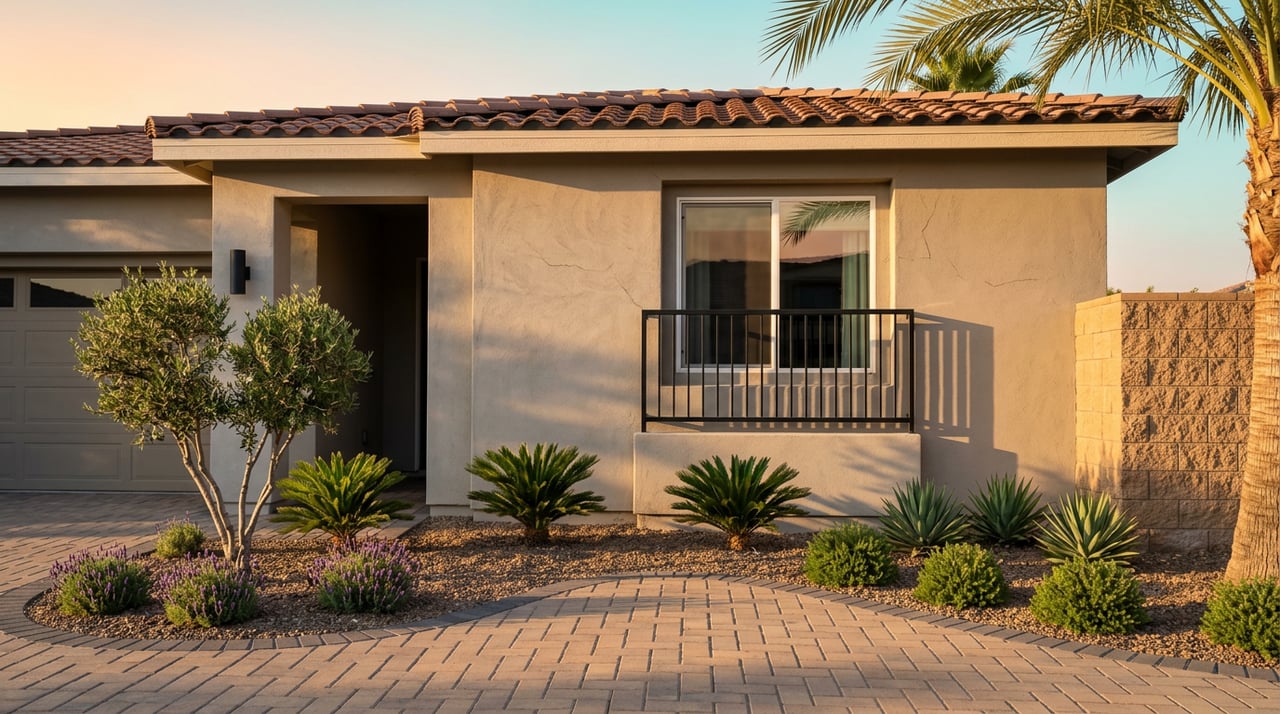
Two Placentia sellers list in the same week. Same tract, both 1962 ranches on 7,200-square-foot lots, both priced around $1.1M. One closes on day 19 with a full-price offer intact. The other watches the buyer chip $22,000 off the price at day 12 after the sewer scope, then walk anyway when the panel inspection turns up a Federal Pacific breaker box. Same house, same block, different preparation. That gap is where a Placentia listing is won or lost right now, and it has less to do with staging than with what the buyer's inspector finds under the slab.
The number that changed the leverage
Through May 2026, Placentia homes sold at a median of $1.2M, up 7.7% year over year, but they took a median of 36 days to sell versus 25 days a year earlier, per Redfin's market tracker. Zoom into ZIP 92870 for the trailing 30 days and Orchard's data shows the sharper signal: 41.18% of homes sold above list, down 5.3 percentage points from the prior year, with 11.77% taking a price drop before they closed.
Translate that into seller math. A year ago, roughly one in two Placentia buyers was willing to pay a premium and skip the small stuff. Today it is closer to two in five, and the other three are pricing in every inspection finding they see. The sale-to-list ratio sits at 100%, which means the average deal is closing at asking, not above. The room the buyer used to give you on repair credits has been quietly repossessed.
That matters more in Placentia than in newer parts of Orange County because of what the buyer's inspector is walking into.
Placentia's housing stock is doing half the negotiating for you
Placentia is essentially built out. Roughly 32% of the housing dates to 1940 through 1969, with the largest share built between 1970 and 1999 and only about 14% built after 2000. Single-family detached homes make up about 60% of units, and most of those single-story ranches were built with materials that are now at or past their expected service life.
A Placentia buyer's inspection report on a mid-century home reliably surfaces some combination of:
- Galvanized supply lines with reduced flow and corrosion at joints
- Cast-iron drain lines with root intrusion, common in Old Town and Alta Vista blocks with mature parkway trees
- Original electrical panels flagged by insurers, including Federal Pacific Stab-Lok and Zinsco
- Water heaters missing current dual seismic strapping
- Cripple walls on raised-foundation homes without retrofit anchoring
- Unpermitted additions from the 1970s and 1980s that never made it onto the assessor's card
- Barrel-tile roofs with 30-plus-year-old underlayment even when the tile itself looks fine
None of these items make a Placentia home unsellable. All of them cost the seller money once the buyer's inspector puts them in writing, because the buyer's agent now has a market that supports asking for a credit.
The sewer lateral rule most Placentia sellers get wrong
Here is the piece that catches even experienced homeowners. Under Placentia Municipal Code Chapter 16.12.070, "it shall be the responsibility of each property owner to maintain the sewer lateral serving his property in proper working order." The city maintains the mains and hands off to Orange County Sanitation District at 35 separate connections, per the city's Sanitary Sewer Maintenance page. Everything from your house to the main is yours.
What Placentia does not have is a point-of-sale sewer lateral compliance certificate. Bay Area cities like Pacifica, San Bruno, and the EBMUD service area require a passing lateral test before escrow can close. Placentia does not. That sounds like good news for the seller. It is actually the opposite.
Because no city process forces the issue upfront, a cracked clay lateral or a stretch of Orangeburg pipe on a 1958 home does not get discovered in a permit review. It gets discovered on day 8 of escrow when the buyer's plumber runs a camera. At that point the buyer holds the leverage, the repair bid is written by the buyer's contractor, and the credit request lands at $8,000 to $15,000 for a spot repair or $18,000 to $30,000 for a full replacement with trenchless lining. A pre-listing sewer scope for a few hundred dollars changes who writes the bid and when.
Where Mello-Roos actually hides in a mostly-legacy city
One of Placentia's genuine advantages as a seller is that most of the city predates the Mello-Roos era. Buyers coming from Irvine, Yorba Linda's newer villages, or Chino Hills often assume a Placentia tax bill will include a special tax and are relieved when it does not.
That relief has limits. Two active city-level Community Facilities Districts show up on specific parcels, per the city's Special Assessment Districts page:
- CFD 2014-01, formed February 18, 2014, funds public safety services associated with new development citywide.
- CFD 2018-01, formed April 3, 2018, funds ongoing maintenance in the Transit-Oriented District around the future Metrolink station and the Packing House area. The Integral/Lyon Living project was the catalyst site and every subsequent TOD project is required to annex in as a condition of entitlements.
There is also a Placentia-Yorba Linda Unified School District CFD No. 1 that appears in the Orange County Treasurer's Mello-Roos filings and covers select parcels. A seller who tells a buyer "Placentia has no Mello-Roos" and then discovers a line item on the title report has just handed the buyer a reason to renegotiate. The five-minute check on the county property tax bill is the entire fix.
The disclosure that has actually gotten heavier
California Civil Code §1103.2 requires the Natural Hazard Disclosure Statement covering six zones: two seismic, two fire, and two flood. Placentia's exposure is not uniform. The Whittier fault, which runs through the northern Orange County foothills, has a preliminary revised Alquist-Priolo Earthquake Fault Zone that clips the north side of the city. Sellers whose parcels touch the zone must mark the NHD accordingly, and buyers reading the report in 2026 are asking follow-up questions about retrofit history that they were not asking in 2021.
The state's Earthquake Zones of Required Investigation map is the authoritative check by parcel. Most third-party NHD providers pull from it automatically, but the seller who orders the NHD early gets to read the report before the buyer does. That order matters. If the report flags a fire severity zone at the edge of the city or a dam inundation area, the seller can price and disclose deliberately instead of reacting to a buyer question in week two.
A pre-listing sequence built for a mid-century Placentia home
Sequence is the point. In a market where 41% of homes are clearing above list and the other 59% are negotiating, moving the discovery of every defect from the buyer's inspection to your own preparation is the single highest-leverage move.
- Order the NHD report the same week you sign the listing agreement. Read it before the photographer arrives.
- Pull the county property tax bill and confirm CFD line items. If your parcel touches CFD 2014-01, CFD 2018-01, or PYLUSD CFD No. 1, the exact annual number goes into the listing remarks.
- Run a sewer camera scope. If the lateral is clay or Orangeburg and shows offsets, get one repair bid from your plumber, not the buyer's.
- Replace or document the electrical panel. Federal Pacific and Zinsco panels do not have to be swapped, but the insurance quote in the buyer's loan file often forces the issue in escrow. Handling it first prices it into your list, not into a credit.
- Verify seismic strapping on the water heater, secure the cripple walls if the foundation is raised, and pull any open permits. Placentia Planning will do a pre-application review.
- Assemble a permit history packet. Unpermitted 1970s bonus rooms are the most common reason a Placentia appraisal comes in short.
Do these six things and the buyer's inspection stops being a renegotiation. It becomes a confirmation.
FAQ
Does Placentia require a sewer lateral test before closing? No. Unlike Pacifica, San Bruno, and cities in the East Bay MUD service area, Placentia has no point-of-sale sewer lateral compliance certificate. The property owner is responsible for the lateral under Municipal Code 16.12.070, but the discovery point defaults to the buyer's inspection unless the seller scopes first.
Are older Placentia homes exempt from the Natural Hazard Disclosure? No. Age of home does not change the disclosure obligation. Every seller of residential property in California must deliver the NHD required by Civil Code §1103.2, and Placentia parcels near the Whittier fault trace or in mapped fire or flood zones require a "Yes" on the corresponding line.
Is it worth doing repairs before listing when the market has softened? For pre-1980 Placentia homes, yes. Sub-half of homes are now selling above list per Q2 2026 ZIP-level data, which means the buyer's inspector has leverage to convert findings into credits. Pre-listing repairs shift that conversation from a discount to a decision the seller has already priced in.
Selling a mid-century Placentia home in 2026 is not harder than it was two years ago. It is more sequenced. The sellers who net the most are the ones who do the buyer's homework first and list the house with the answers already in the file. That is the entire premise of the Two Week Selling System™ at The Bald Brothers Team. If you own a Placentia home built before 1980 and want a pre-listing plan built around what a Placentia buyer's inspector will actually find, start with a free plan and we will build it with you.